• Skip to primary navigation
  • Skip to main content
Thaddeus Pope Documentary Photography Japan Website Logo

Thaddeus Pope Documentary Photography

Documentary Photographer based in Japan

  • HOME
  • ABOUT
  • PHOTO ESSAYS
  • MATSURI
  • EVENT PHOTOGRAPHY
  • TESTIMONIALS
  • CONTACT
  • TADO VISUALS ↗︎

Konomiya Hadaka Matsuri (Naked Man Festival)

Konomiya Hadaka Matsuri
(Naked Man Festival)

Photography and Text by Thaddeus Pope

SHARE THIS
  • Share on Twitter Share on Twitter
  • Share on Facebook Share on Facebook
  • Share on Pinterest Share on Pinterest
  • Share on LinkedIn Share on LinkedIn
  • Share on Reddit Share on Reddit
  • Share via Email Share via Email

JUMP TO GALLERY

Home >> Photo Essays >> Matsuri >> Konomiya Hadaka Matsuri (Naked Man Festival)

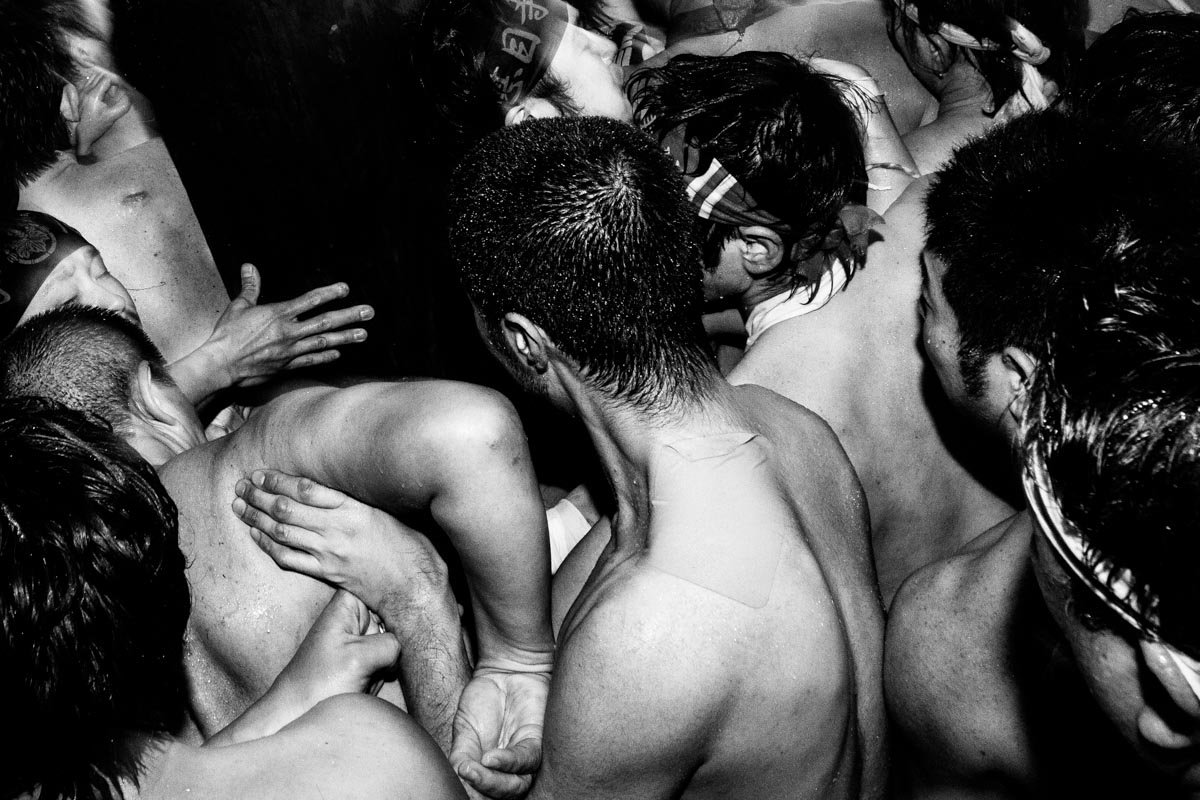
Every February, when Japan is at its coldest and the winter chill cuts past the skin and deep into the bones, the streets of Inazawa in Aichi Prefecture fill with half-naked men. They come in their thousands – close to 10,000 of them – descending on the city in fundoshi loincloths, flushed with sake and braced against the cold. To a first-time visitor, the Konomiya Hadaka Matsuri – the Naked Man Festival – can appear unruly to the point of delirium: a roaring, heaving mass of bodies, steam rising from bare skin, the crowd pressing in with ritual desperation. Yet the people of Inazawa do not meet the spectacle with alarm. They step outside to watch it as they always have. For them, this is not disorder. It is inheritance.

An estimated 140,000 spectators come out for the day’s events, and they do so in a town that has been hosting the festival, in one form or another, for more than a thousand years. According to local tradition, the rites date back to AD 767, when Emperor Shōtoku ordered purification ceremonies to rid the land of plague. In older tellings, those ceremonies centred on a human offering: an unsuspecting traveller, drawn in by the town’s hospitality and burdened with its misfortune. The violence of that story has long since been stripped away, but not the central idea. The festival still turns on the belief that bad luck can be gathered, transferred and carried off by a single body.

That body belongs to the shin-otoko – the “man of God”, also known as the naoinin, or misfortune-bearing person. His task is simple only in description. In the days before the festival, he is kept apart in solitude and prayer, then ritually shaved from head to toe – even his eyebrows removed – before being sent naked into the crowds. He must run through Inazawa and reach Konomiya Shrine while being pursued by men desperate to touch him, press against him and collide with him – to rid themselves, however briefly and symbolically, of whatever ill luck they fear is clinging to them. What looks, from the outside, like drunken chaos is in fact the rough logic of the day. This is not only a spectacle of endurance, masculinity or excess. It is a communal rite of cleansing, with all the violence, absurdity and sincerity that such a rite can hold.

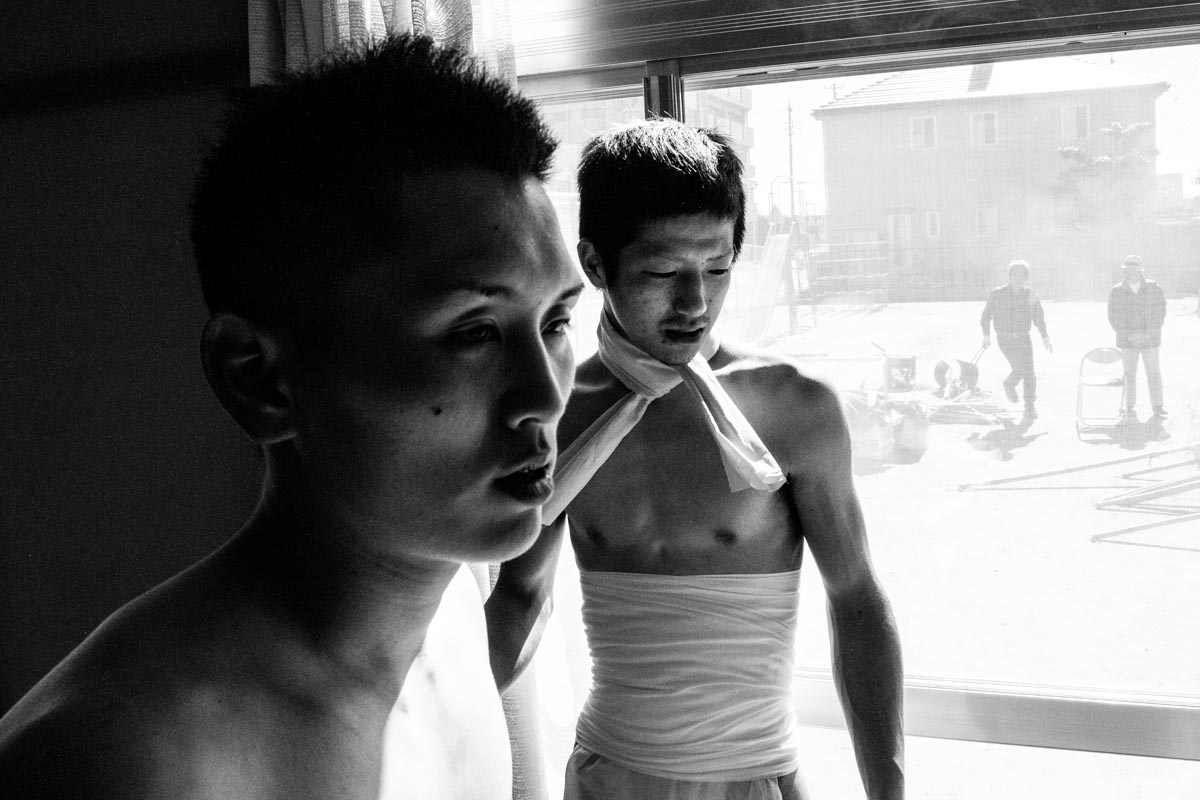
Being British – and therefore instinctively sympathetic to histories of plague, bad luck and punishing weather – I decided not simply to watch, but to take part. I joined a group of men from a nearby community and followed their preparations from the start. The first stop was a local nursing home, owned by one of the participants, where we bathed communally to cleanse our bodies before the march. Then came a local primary school, where breakfast had been laid out: sushi, karaage, sake and beer. It was a meal pitched somewhere between ceremony and fortification. We ate, drank and waited, the mood shifting steadily from sociable to primed and ready for action.

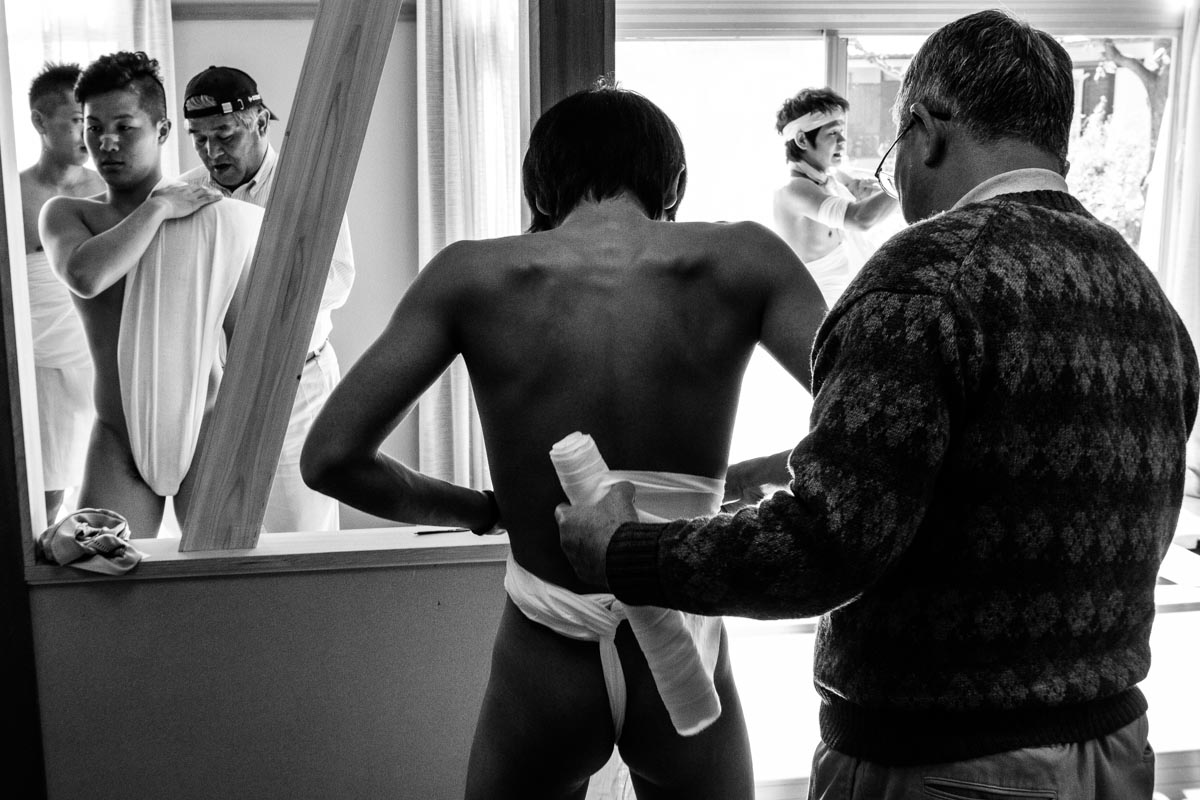
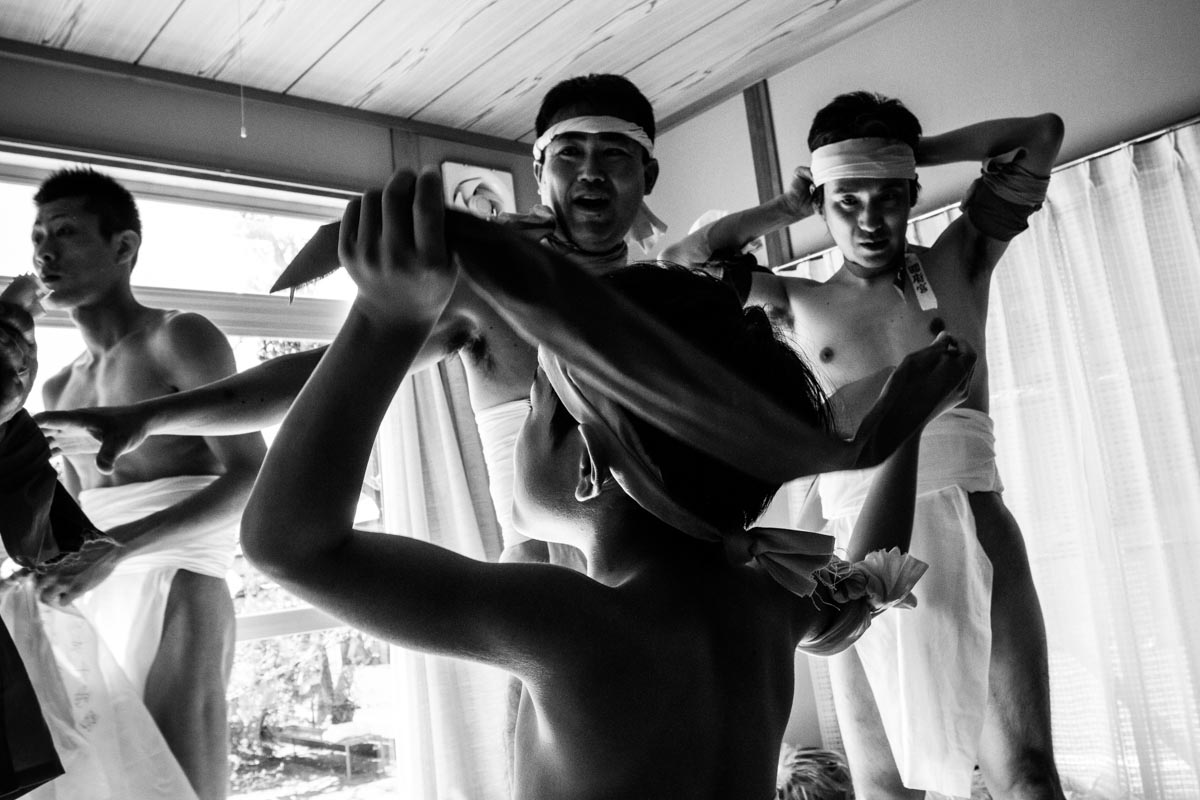
Soon enough there was nothing left to do but strip. I was manhandled by two cheerful older gentlemen into a fundoshi so tight it seemed designed less as clothing than as a test of character – think a sumo wrestler’s loincloth, only thinner and less forgiving. It offered little in the way of warmth and even less in the way of dignity. Around our heads and arms we wore brightly coloured bands to mark our group; our district’s ribbons were pink. In any other setting, the whole business would have felt absurd. Here, it merely felt inevitable. Fear, pride, drink, camaraderie and the pressure of the group did their work.

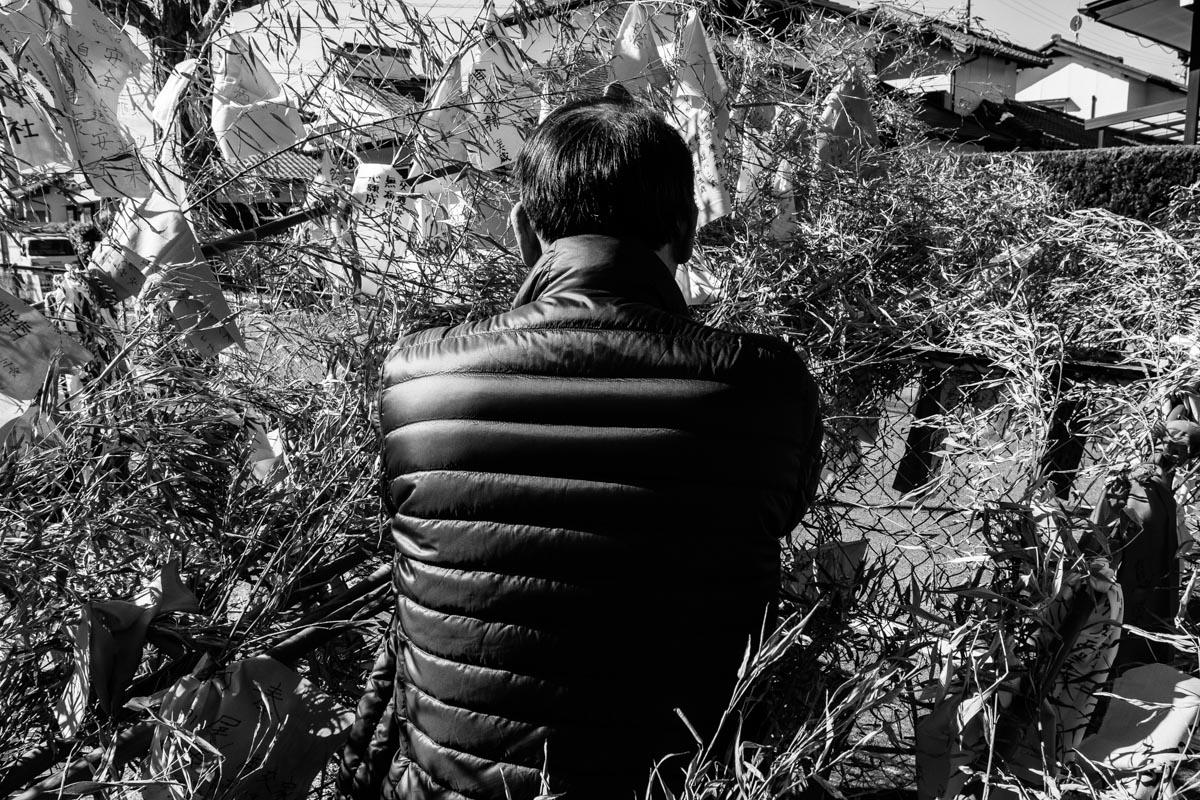
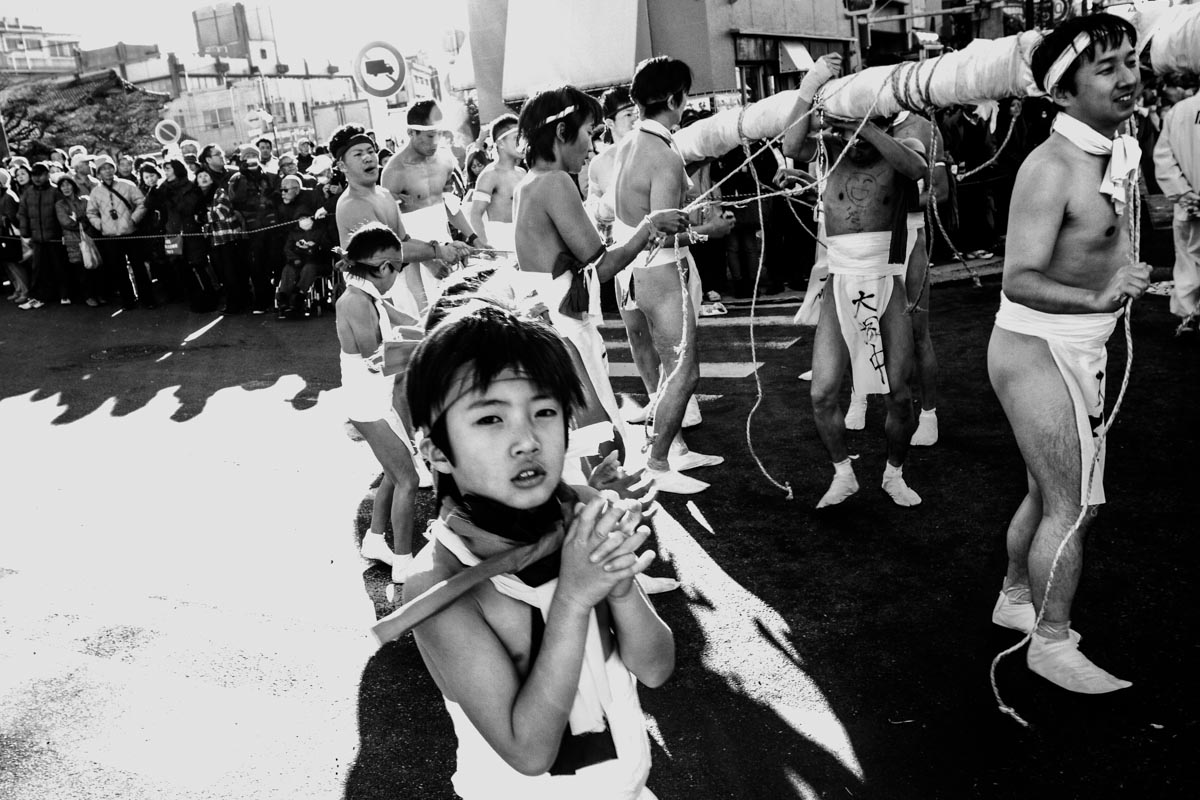
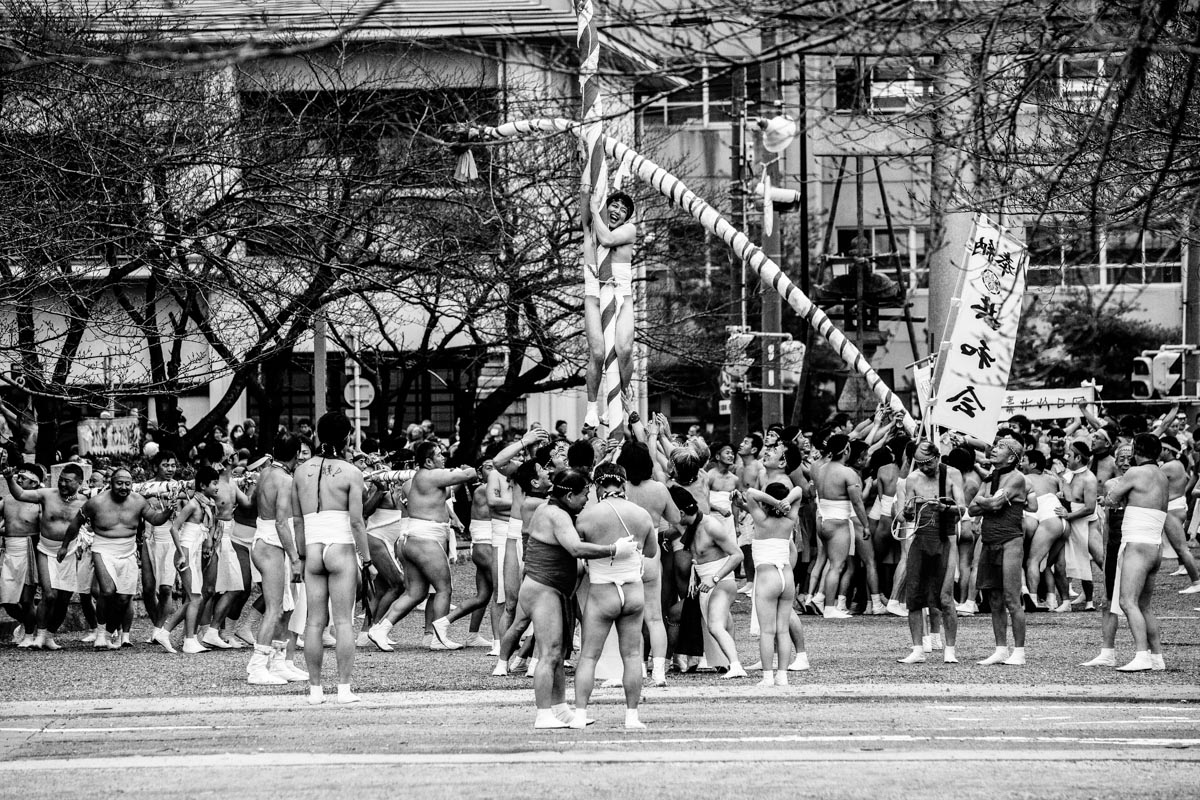
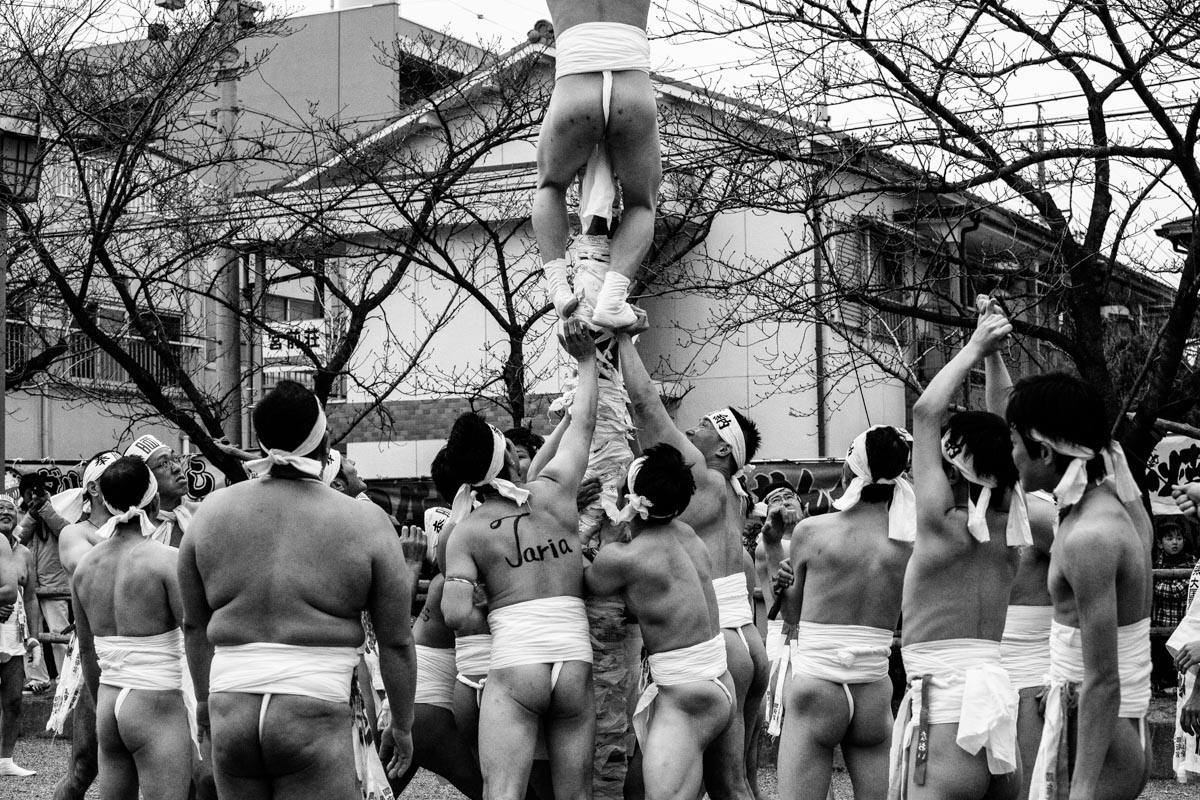
By the time we set off towards Konomiya Shrine, carrying the naoi-zasa and moving as a single pack, embarrassment had begun to give way to momentum. The naoi-zasa was a tightly bound bundle of long bamboo poles carried on our shoulders throughout the day. Inside it were pieces of cloth known as naoi-gire, inscribed with the names, birthdays and wishes of those unable to take part in the festival themselves. At intervals the poles were hoisted into the air or stood upright, and men would try – usually unsuccessfully – to climb them.

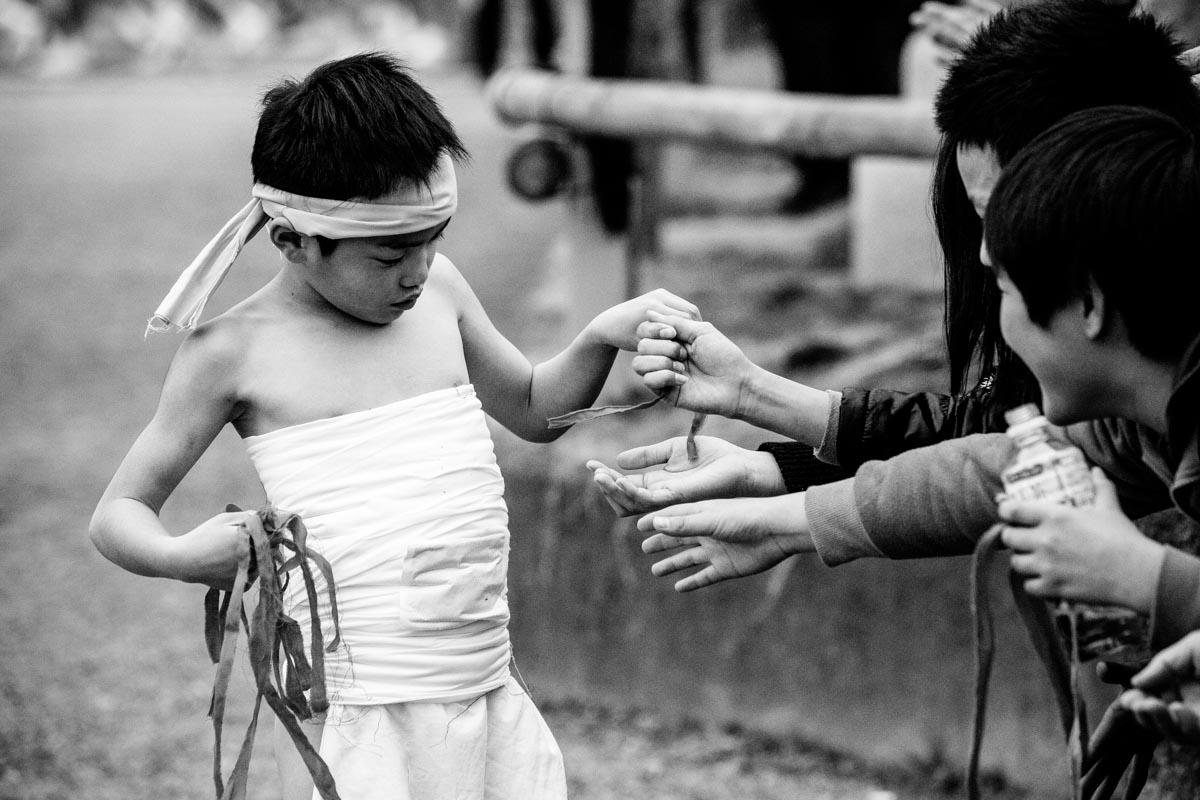
The procession did not move straight to the shrine. First we wound through our district, stopping at homes and businesses where members of the community handed out food and, more often than not, more alcohol. In return, we gave them pieces of our armbands as tokens of good luck. The exchange made clear that the festival was not confined to the men marching in loincloths or to the chosen figure at its centre. It belonged to the town as a whole, sustained as much by those feeding, watching and encouraging the procession as by those enduring it.

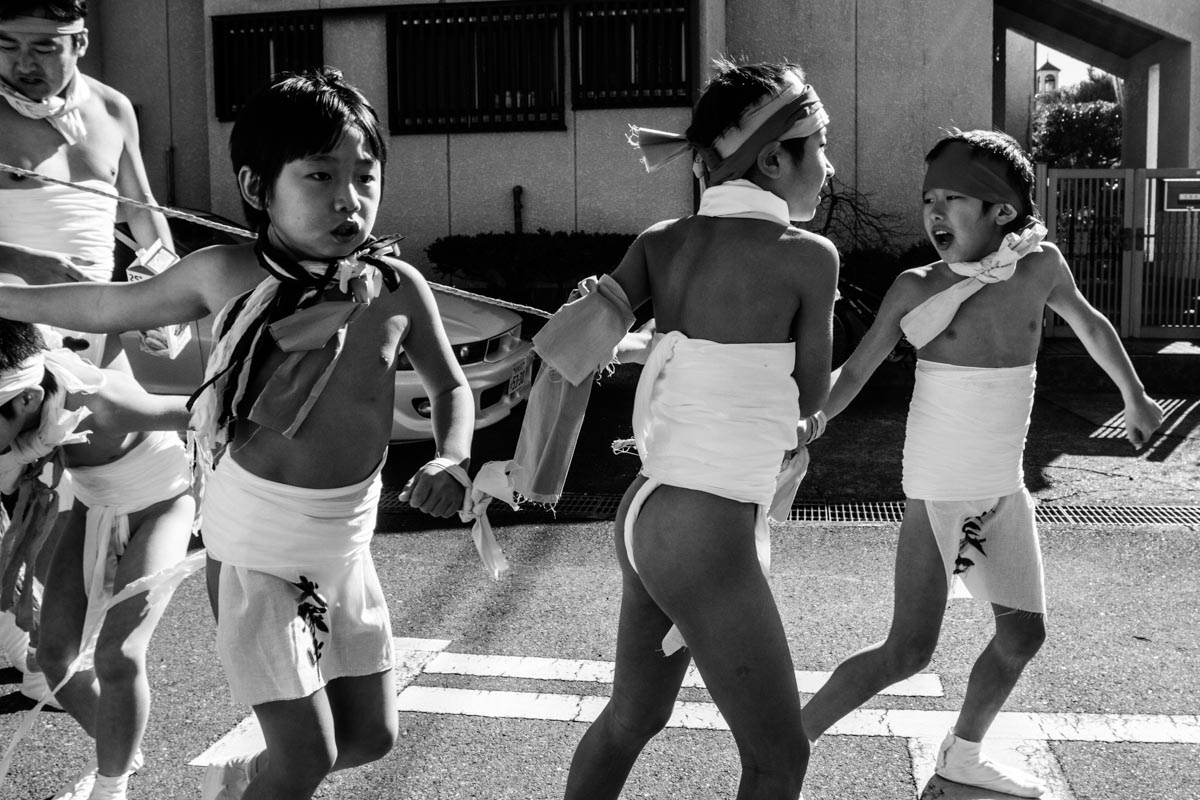
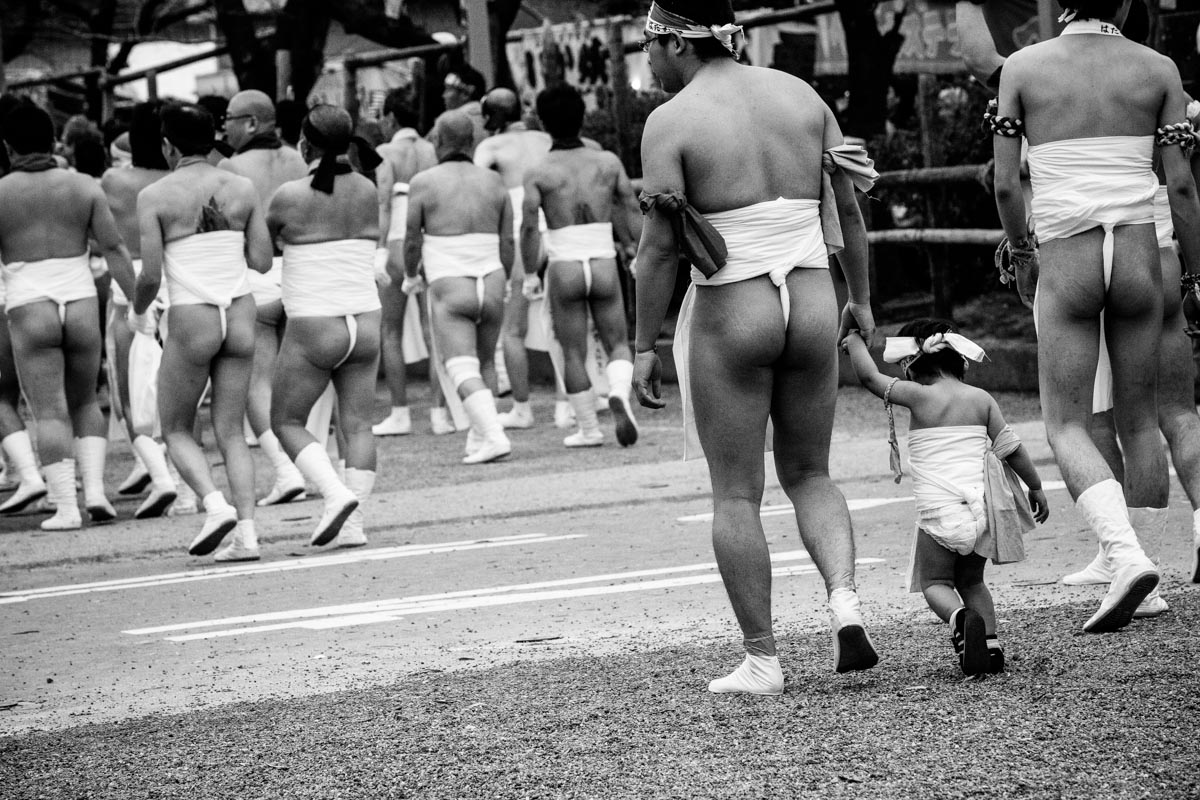
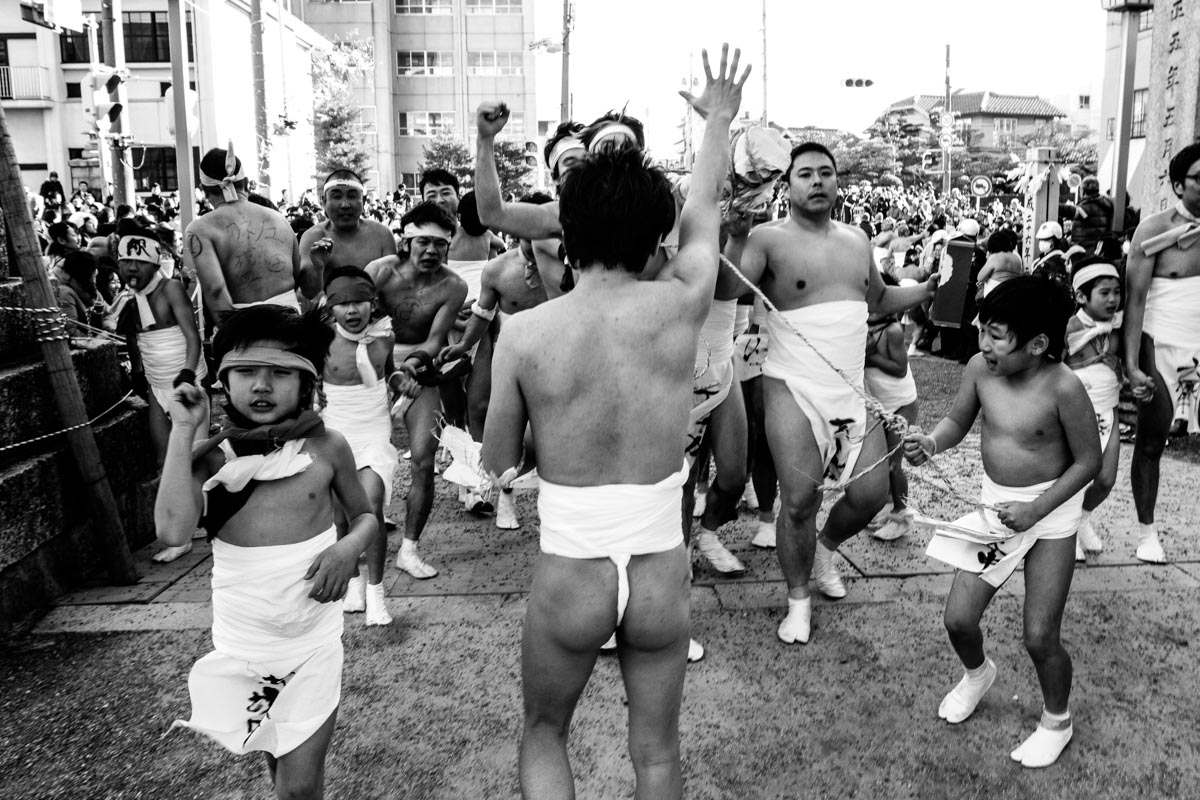
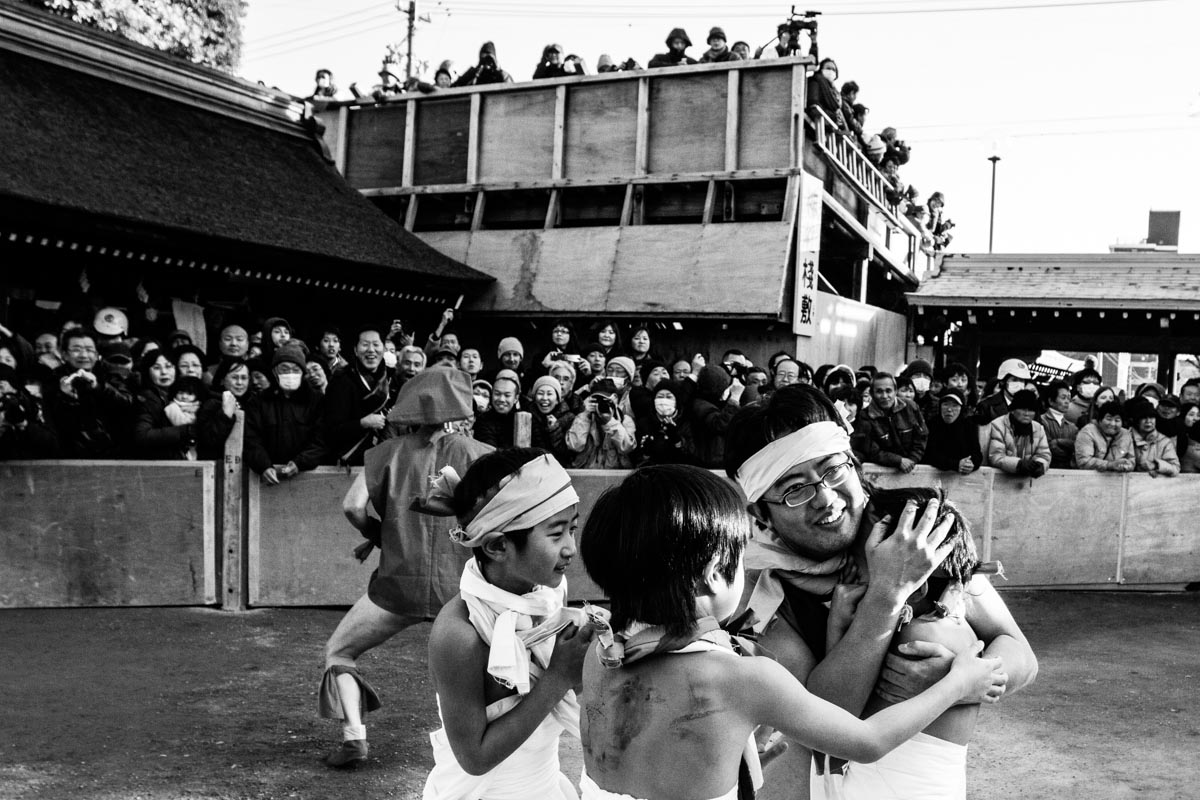
Among the most impressive participants were the young boys marching alongside their fathers. Without the benefit of alcohol to warm them, they faced the same bitter cold in miniature, their hands, feet and lips drained blue by the temperature. Yet they pressed on with a seriousness that made them seem less like mascots than apprentices to the ritual, learning early how a tradition is carried not by spectacle alone but by repetition, endurance and example.

Enjoying the article?

Sorry to interrupt. If you’ve been enjoying the article, I’d love for you to take a brief detour to Instagram and follow @thadpope. The link opens in a new window, so you can follow the page and then return here straight away to continue reading. Thanks for the support.

Follow @thadpope on Instagram ↗︎

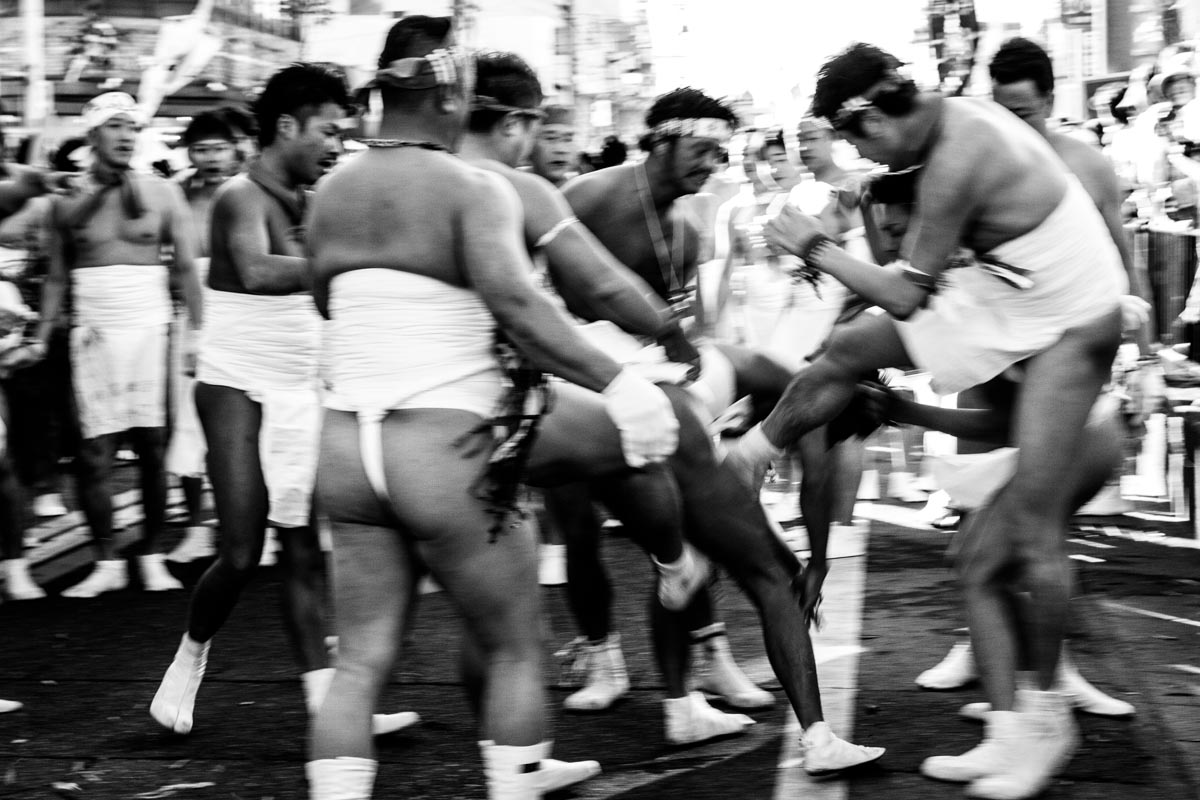
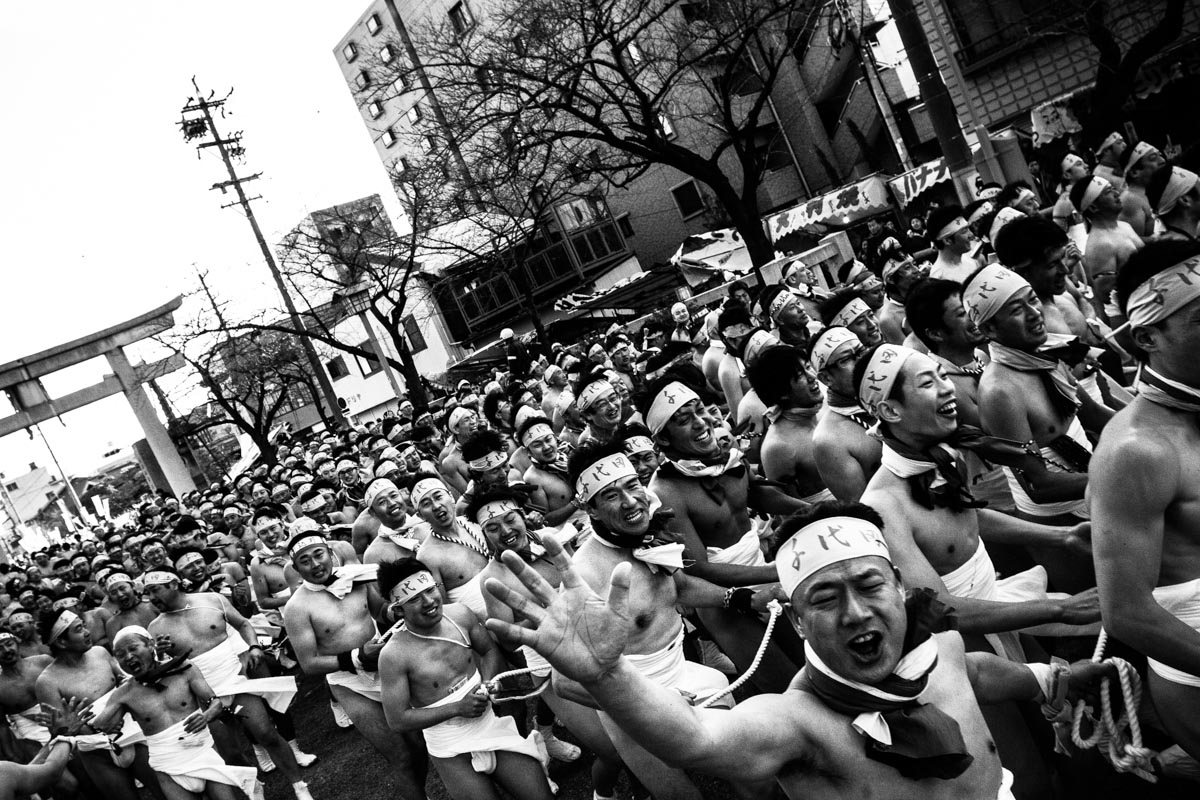
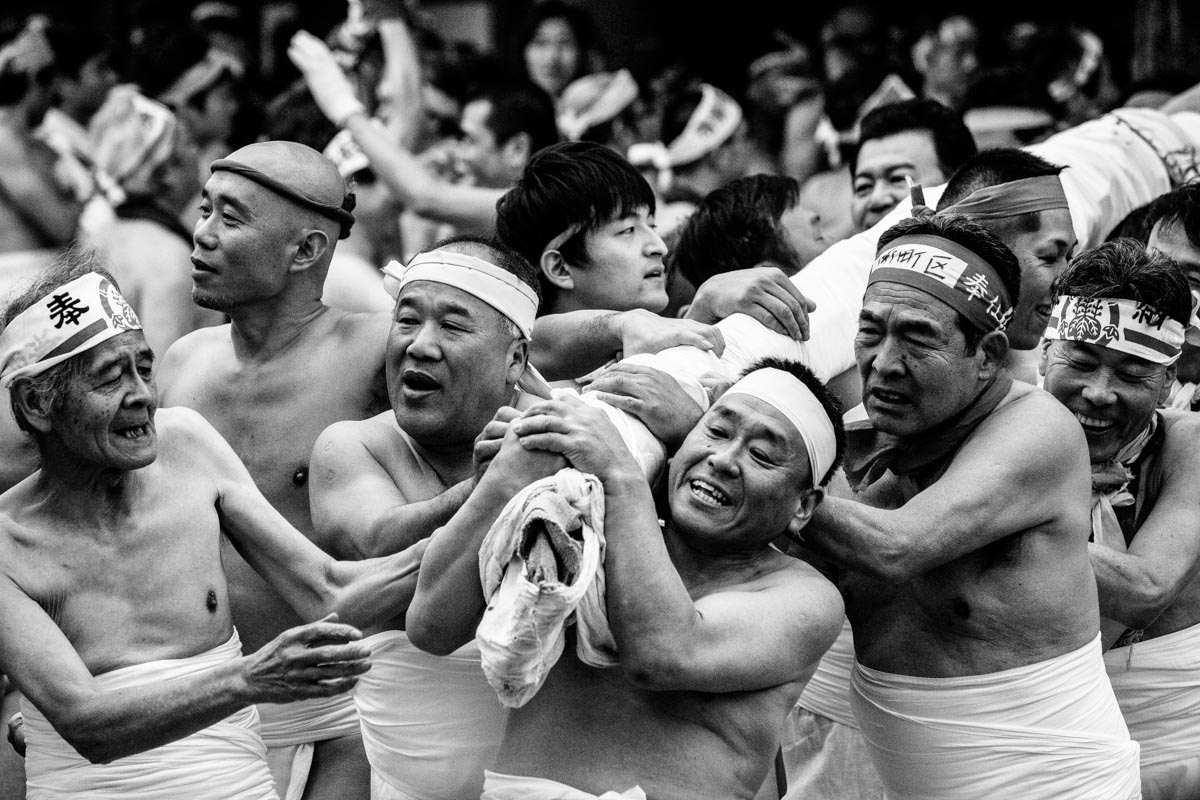
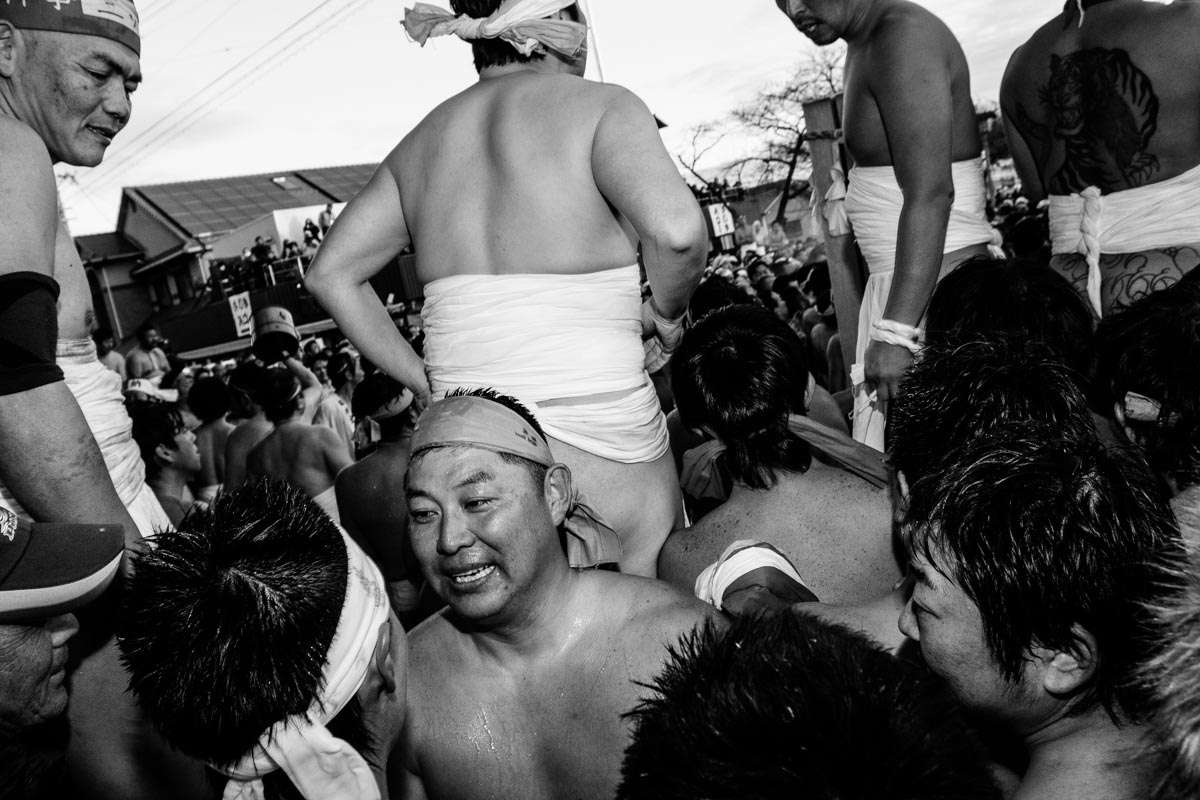
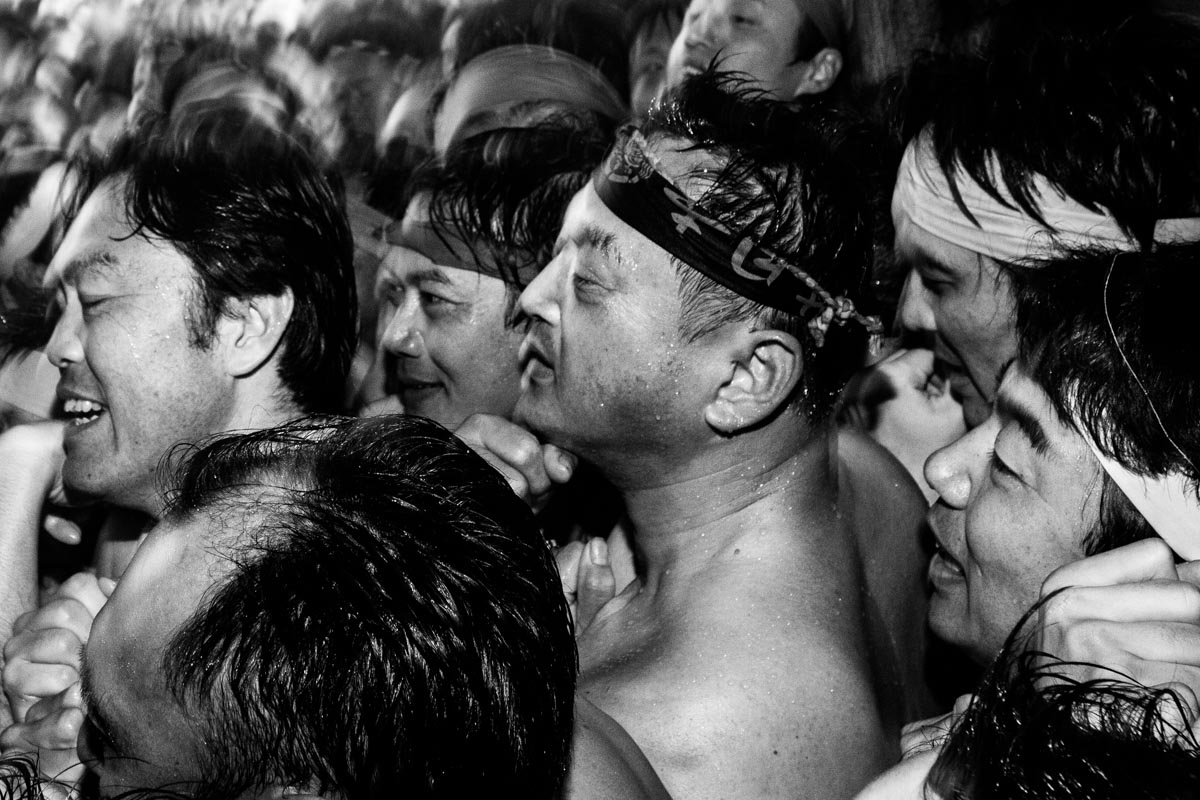
What I remember most from that walk is the speed with which self-consciousness disappeared. At first I could not stop noticing the obvious facts of my situation: I was virtually naked, bitterly cold and one of the only foreigners in sight. But the festival has its own weather system. Charged by sake, sweat and noise, you are quickly absorbed into its atmosphere. As we left the quieter streets where we had begun the day and joined the converging groups from other districts on the main route to the shrine, the crowd grew louder and more raucous. Spectators lunged forwards to snatch at headbands and armbands believed to bring good luck. The men around me – businessmen, mechanics, engineers, software developers – were transformed by the crush of growing numbers into something less orderly and more elemental. Individuality blurred. What mattered was movement, force and contact.

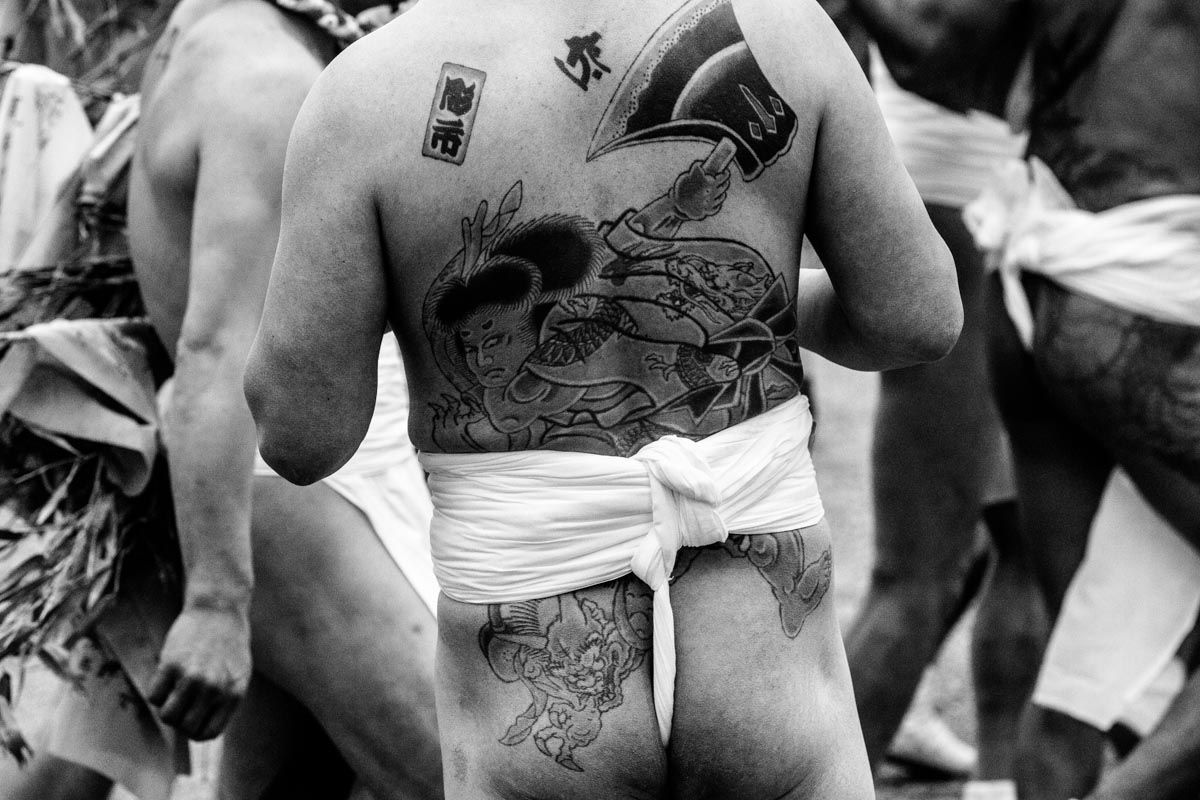
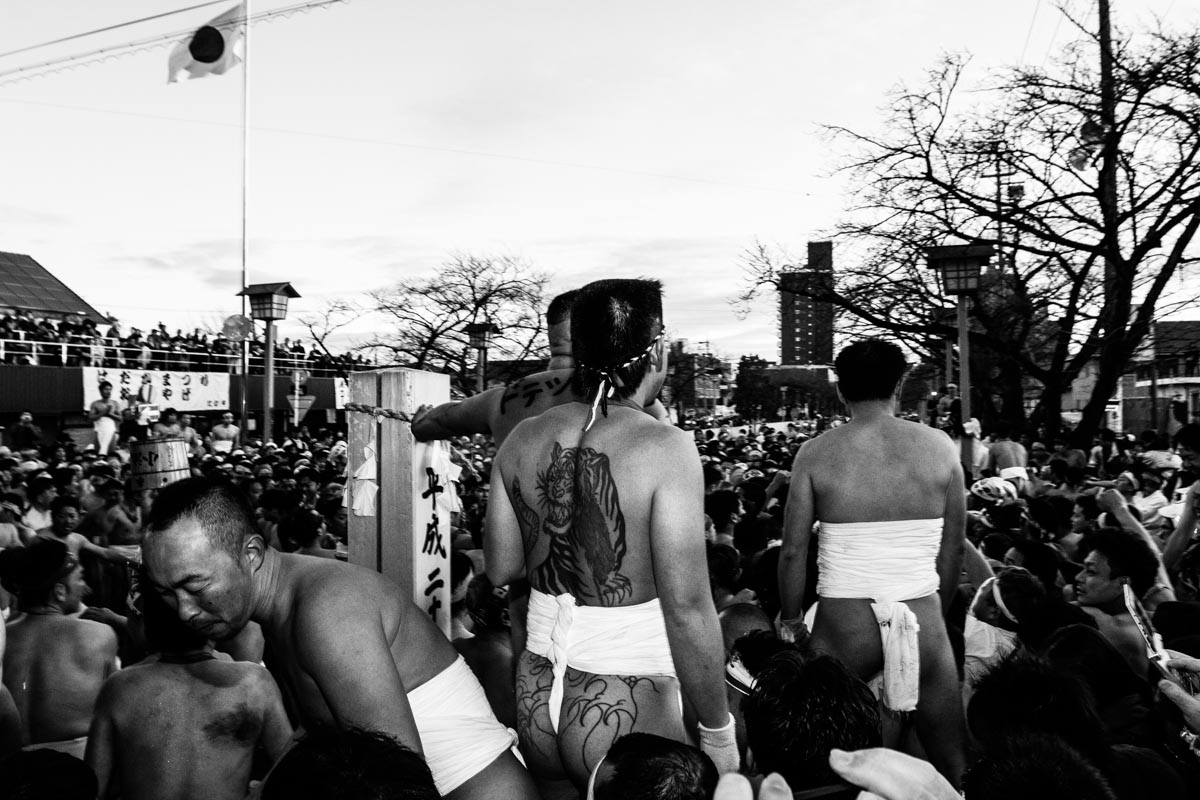
Not everyone looked as though he had walked out of an office. Threaded through the procession were men whose large, intricate tattoos hinted at yakuza associations. They did not dominate the scene, but they sharpened it, giving visible form to the sense that the festival draws together kinds of masculinity not often pressed into such close quarters. The respectable and the rough-edged, the dutiful and the theatrical, the devout and the thoroughly drunk – all of them were there, stripped to almost the same uniform. Many had come because they were living through their yakudoshi – the unlucky ages of 25, 42 and 61 – and wanted, with a seriousness that seemed to survive even the drink, to lay a hand on the chosen man who could absorb their misfortune. The belief may be symbolic, but the desire it produces is not. You could feel that in the crush: in the urgency, the shouting, the sudden flare of scuffles and scraps, the occasional fistfight breaking through the press of bodies before dissolving back into it.

And yet the day never felt merely lawless. However bruising, however boisterous, the chaos moved within a recognised shape. Another bottle of sake would appear. Banter and laughter flowed as freely as the drink. The line would lurch forward again. The town, which to an outsider might seem to be surrendering itself to pandemonium, instead appeared to be holding something older and more essential in place – making room, across the long arc of a bitter winter’s day, for a ritual in which disorder is not the opposite of order but one of its accepted forms.

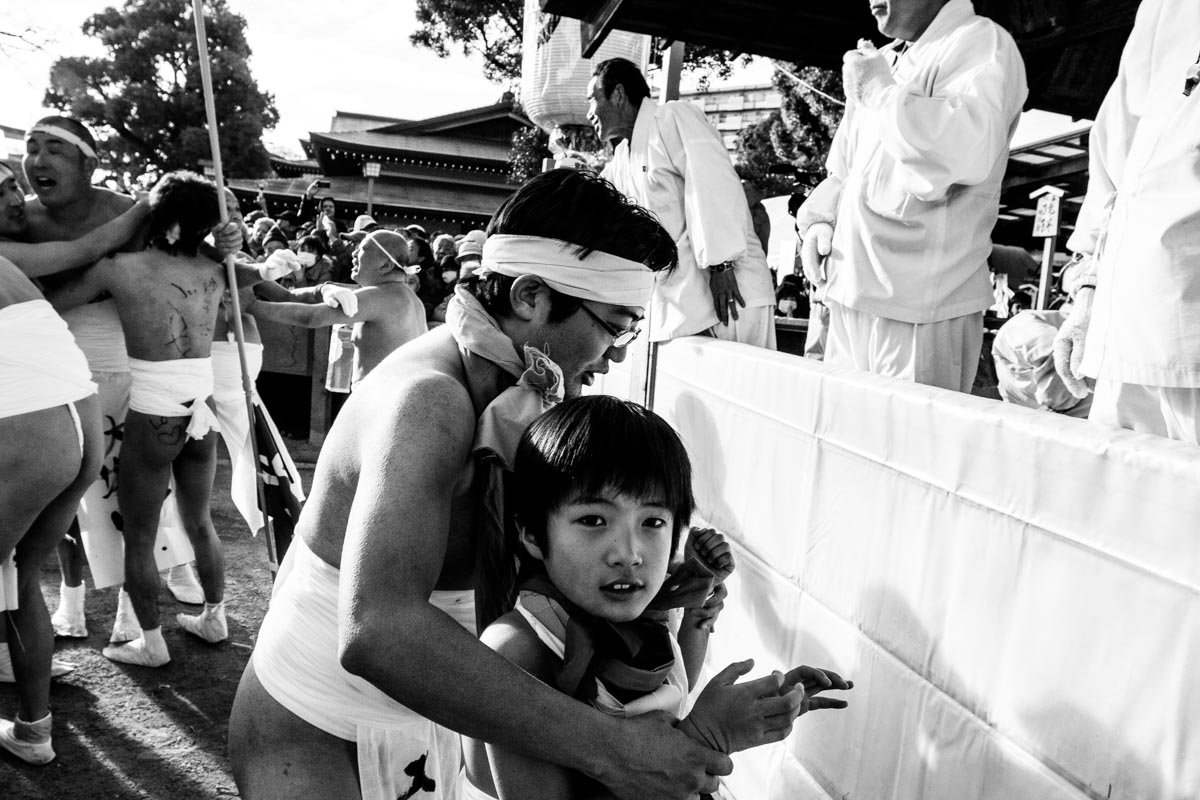
When we finally reached the shrine entrance, numb with cold, our team hoisted the naoi-zasa onto our shoulders one last time and handed it up to the priests, while the groups ahead of and behind us did the same and the massive offerings disappeared inside. After a day of carrying them, the poles had left welts on our shoulders and raw patches on our hands from the repeated effort of lifting them, balancing them and, at intervals, trying to climb them. Shortly afterwards, the youngest boys peeled away to their families, who were waiting with warm clothes and blankets – their part in the day complete – and the festival gathered itself for its final push. But the handover of the offerings did not bring immediate release. We remained packed outside the shrine, held in the crush as evening closed in and the last rites approached.

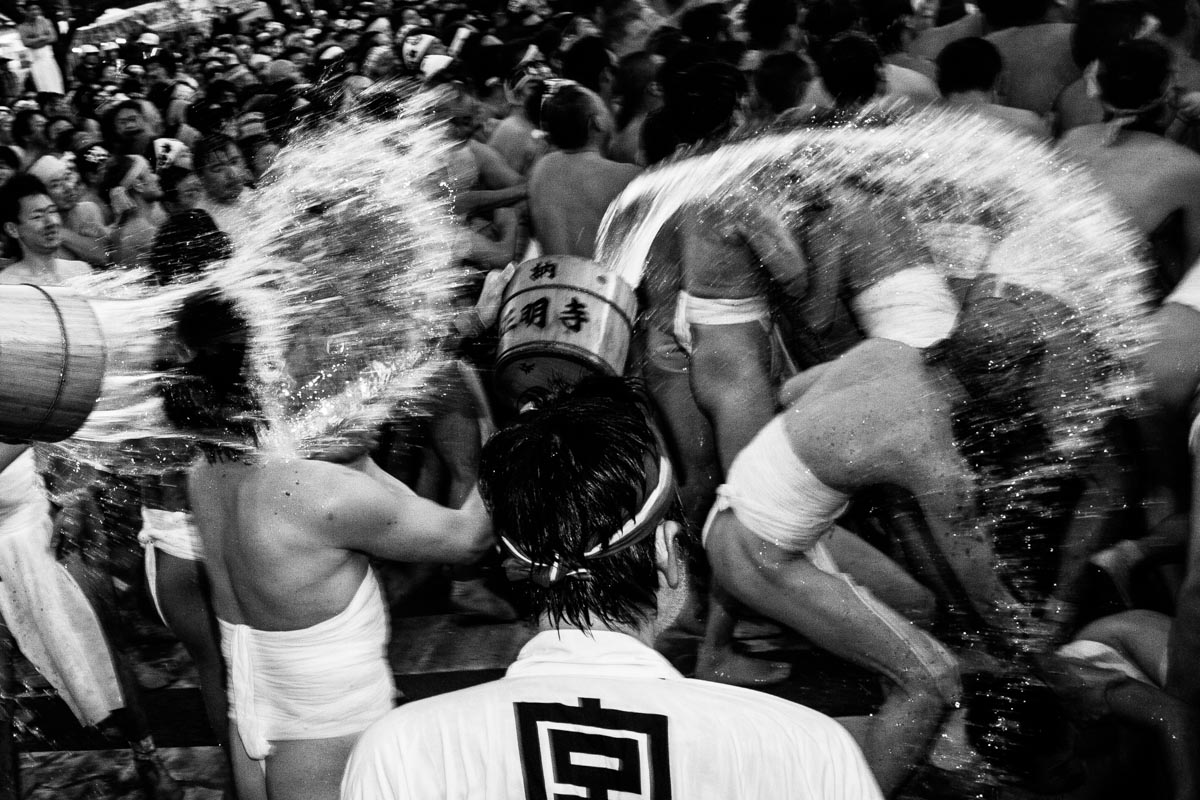
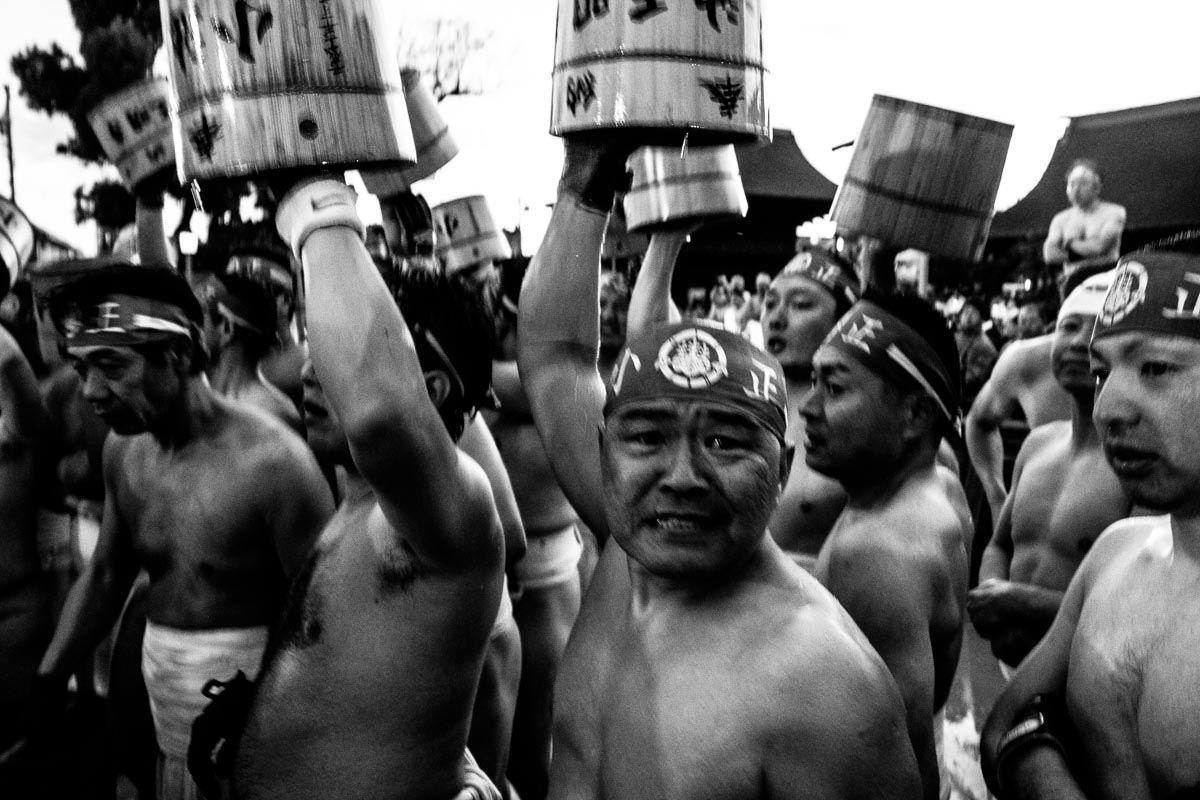
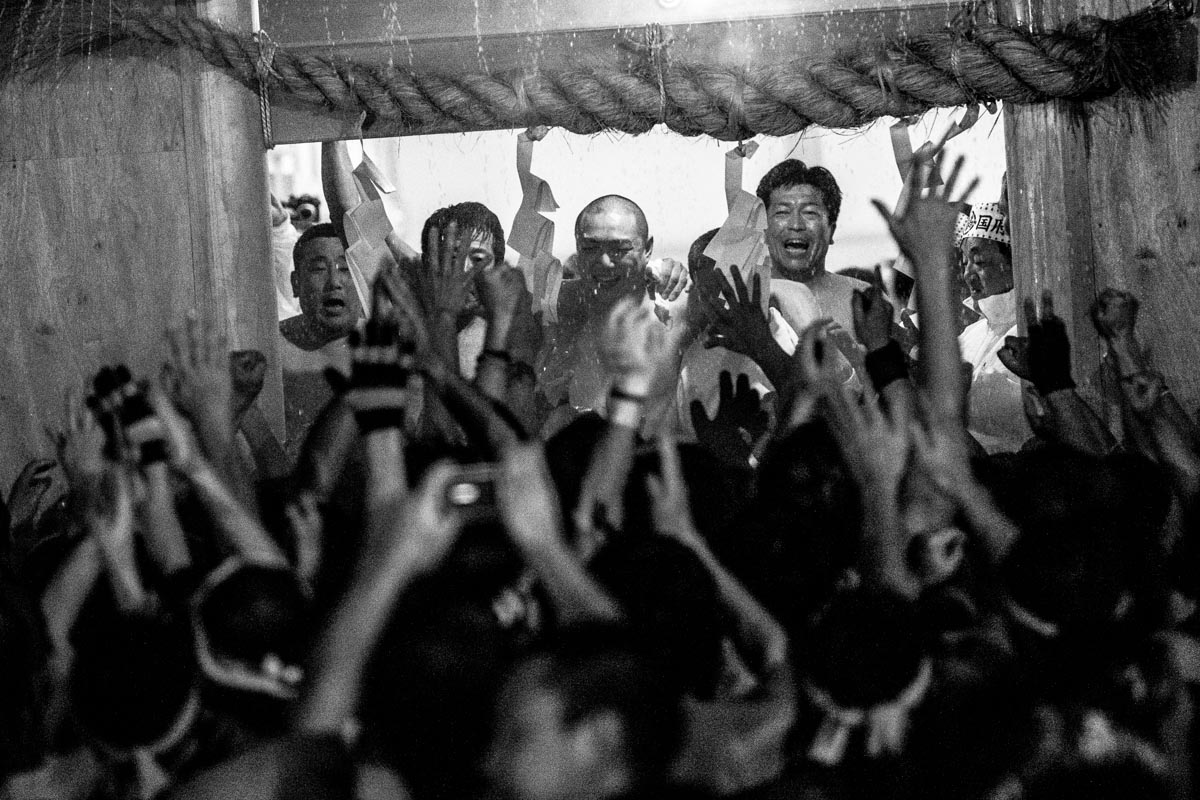
As the last light began to drain from the sky, the temperature fell, and the mood darkened with it. Sweat ran despite the cold. Then blood began to appear too, as bodies slammed into one another and the crowd surged in waves towards the shin-otoko. The mass of men grew louder and more forceful as it pushed and clashed through an ever-narrowing funnel into the shrine grounds. Then participants carrying wooden buckets began appearing near the shrine entrance, repeatedly dousing one another with icy water in a final test of endurance and dedication.

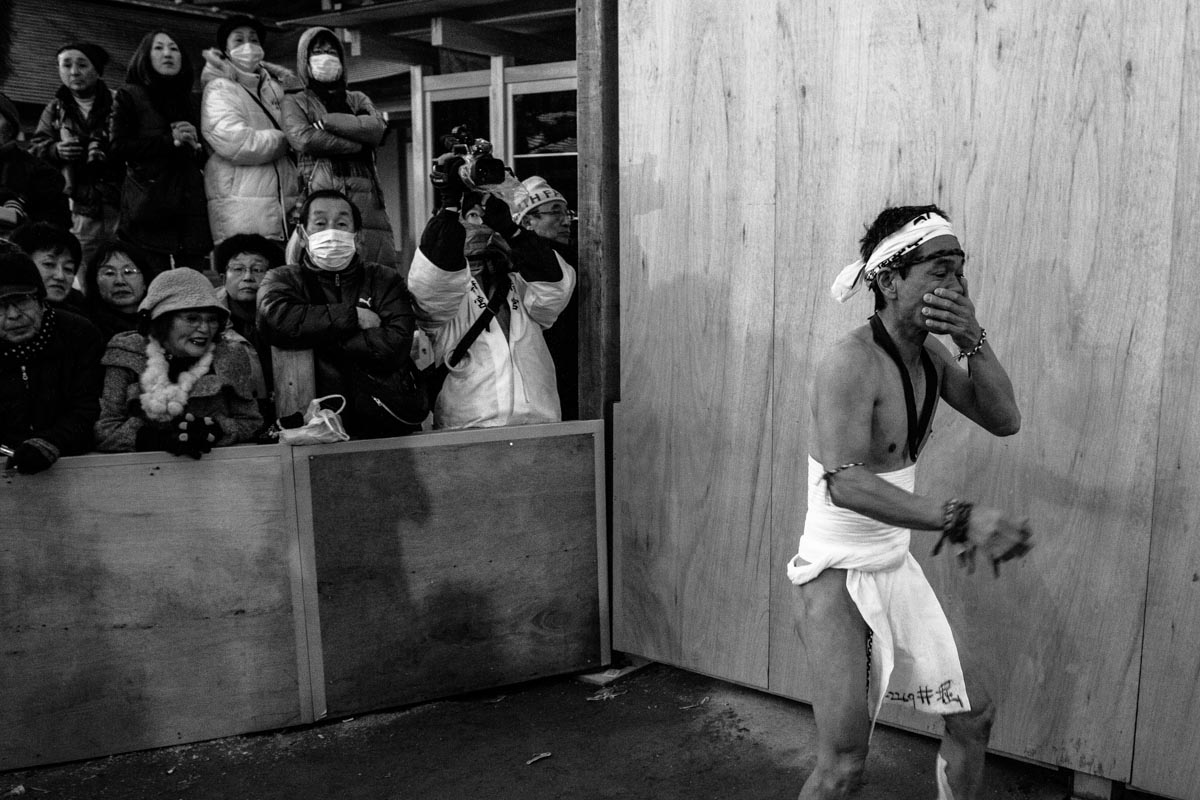
Then, at last, the shin-otoko came into view, his ritually shaven head catching the floodlights in the dark. He drove himself forwards as men clambered towards him – some trying to lift him, others pulling him off course, all trying to touch him – until priests reached out from within the shrine, scrambling over the tightly packed bodies to seize him and haul him bodily inside, where the final rites were performed and his task completed. When he appeared at the entrance again, his mission done, he smiled broadly and bowed. A raucous cheer went up, followed by hugs, high-fives and the easy congratulations of men who had seen the thing through, before they drifted back towards the wives, mothers and children waiting at the sidelines.

What remained, once the crowds had dispersed and the noise had begun to fall away, was the sense of having been folded, however briefly, into something communal and enduring. For all its chaos and theatrical excess, the Konomiya Hadaka Matsuri revealed itself as more than an act of collective faith: it was a rite of cohesion, drawing people together across families, districts and generations, forging ties of loyalty, familiarity and mutual recognition, and binding them not only to one another through shared hardship, but to the history and inheritance they had come to uphold. That, more than spectacle, seemed to be how the festival endured – in the people willing to bear its cold, carry its weight and sustain it from one generation to the next.

To view other photo-essays from the “Matsuri” photography project, click here.

Text and images copyright © Thaddeus Pope. All rights reserved. No unauthorised use, reproduction, distribution, or publication without prior written permission.

Join Mailing List

If you’re enjoying my work and would like to hear when new photo essays are published, join my mailing list. You can unsubscribe at any time.

SUBSCRIBE

Support the Work

If you’d like to support my work, you can buy me a coffee via PayPal below. It helps with the many hours of research, writing, editing, and website design that continue long after the camera has been put away.

BUY ME A COFFEE ↗︎
Continue reading
Show less

Gallery

Image copyright © Thaddeus Pope. All rights reserved.
Thaddeus Pope Documentary Photographer Japan

Thaddeus Pope

Documentary photographer based in Japan

I’m Thaddeus Pope, a documentary photographer who also works in website and print design. I am available for assignments in Japan and internationally.

To get in touch, please use the contact form or email info@thadpope.com.

    Filed Under: Documentary, Matsuri, Travel Tagged With: Aichi Prefecture, Hadaka Matsuri, Inazawa City, Japanese Festival, Konomiya Hadaka Matsuri, Naked Man Festival

    Privacy Policy
    © 2026 Thaddeus Pope · Website Design and Development