

Nakada Hadaka Matsuri
Photography and Text by Thaddeus Pope
SHARE THIS

Home >> Photo Essays >> Matsuri >> Nakada Hadaka Matsuri
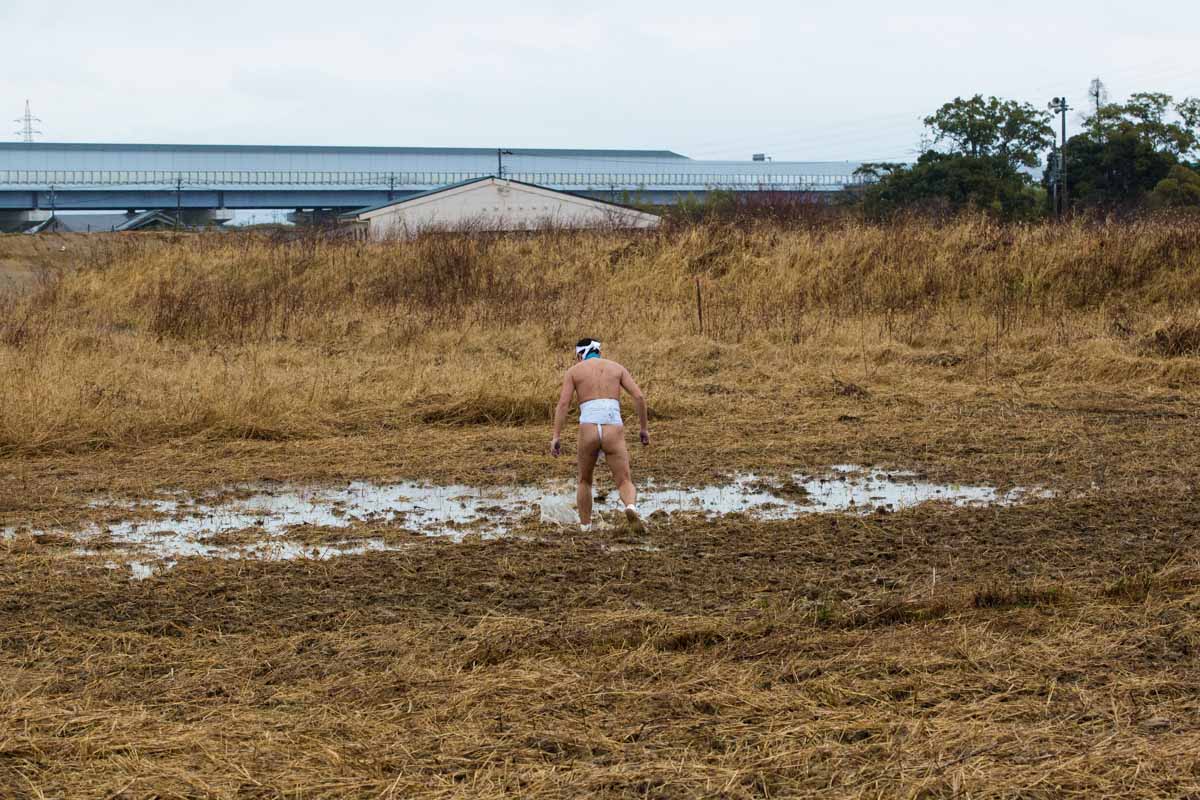
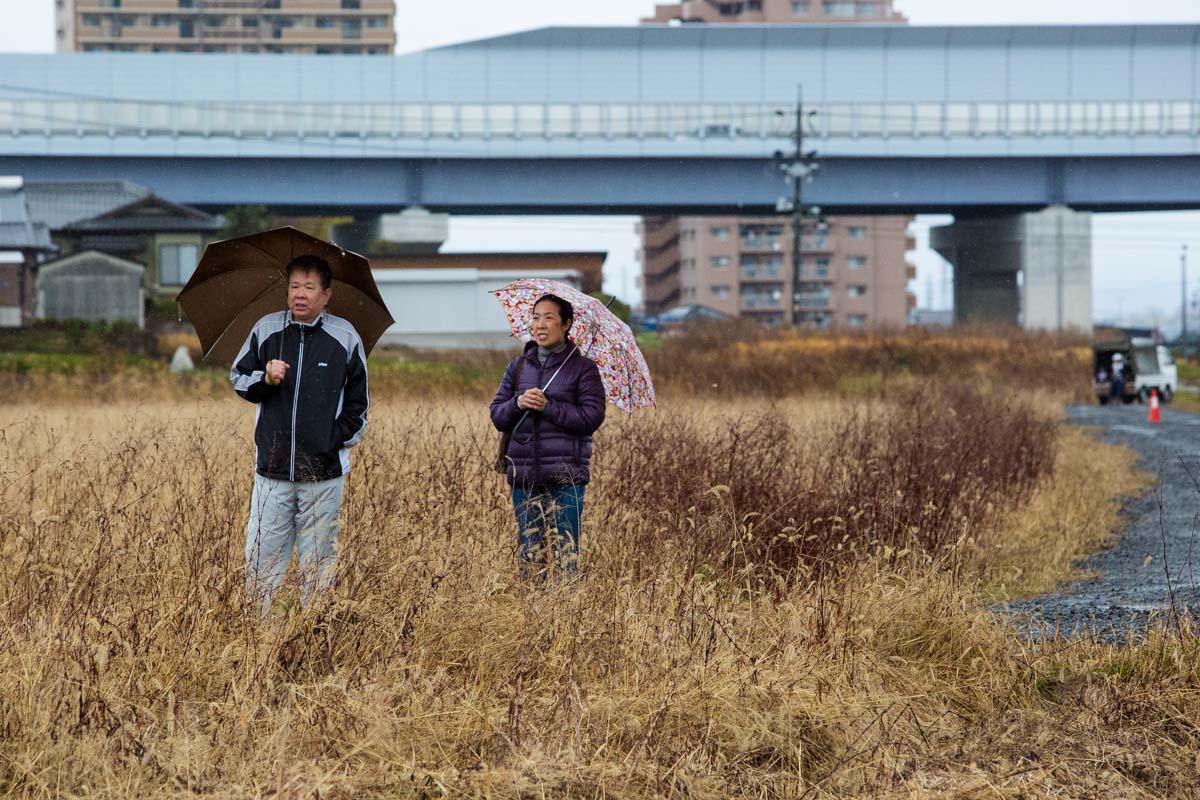
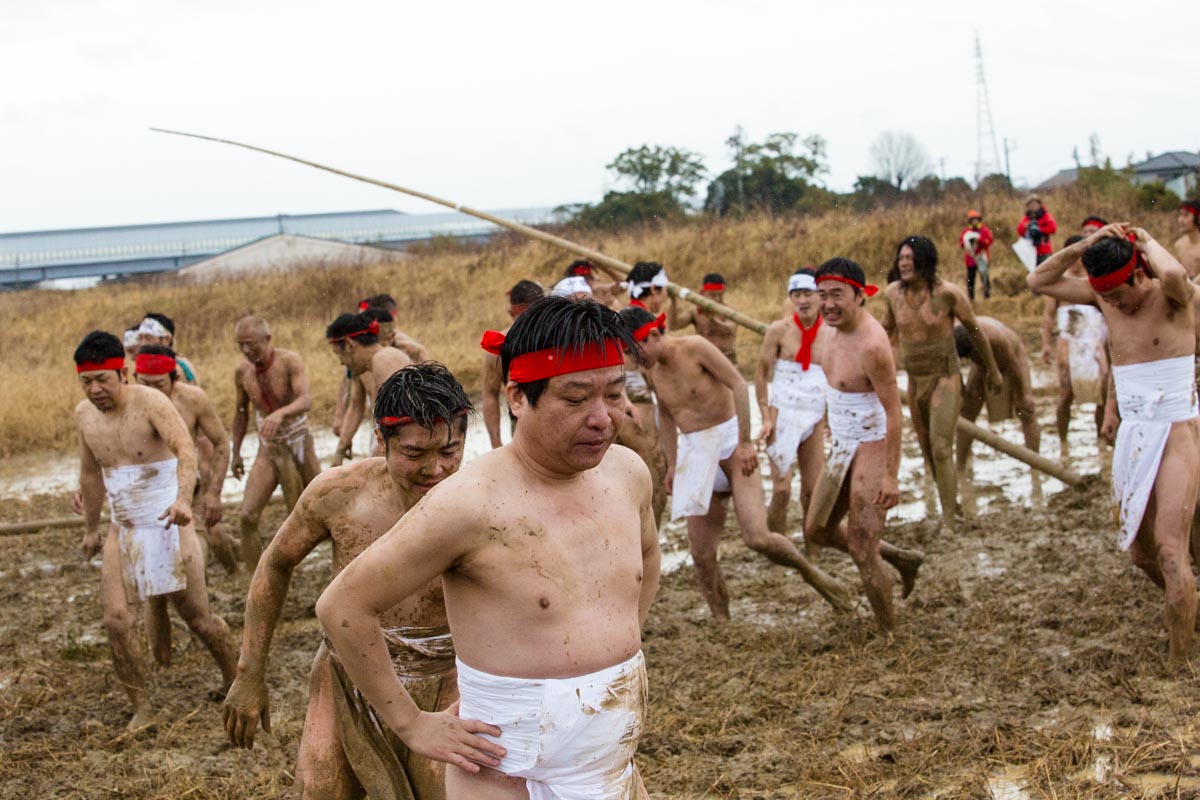
A lone man in a white fundoshi stepped into the waterlogged paddy on a grey, rainy morning, his split-toe tabi shoes pulling free of the mud with a wet suck at each step. Beyond the field ran the hard line of the road and the low sprawl of houses and traffic; underfoot, days of rain had turned the earth to brown slurry. He moved a little way into the paddy and tested the surface, looking down, gauging how much it would give before the others arrived.
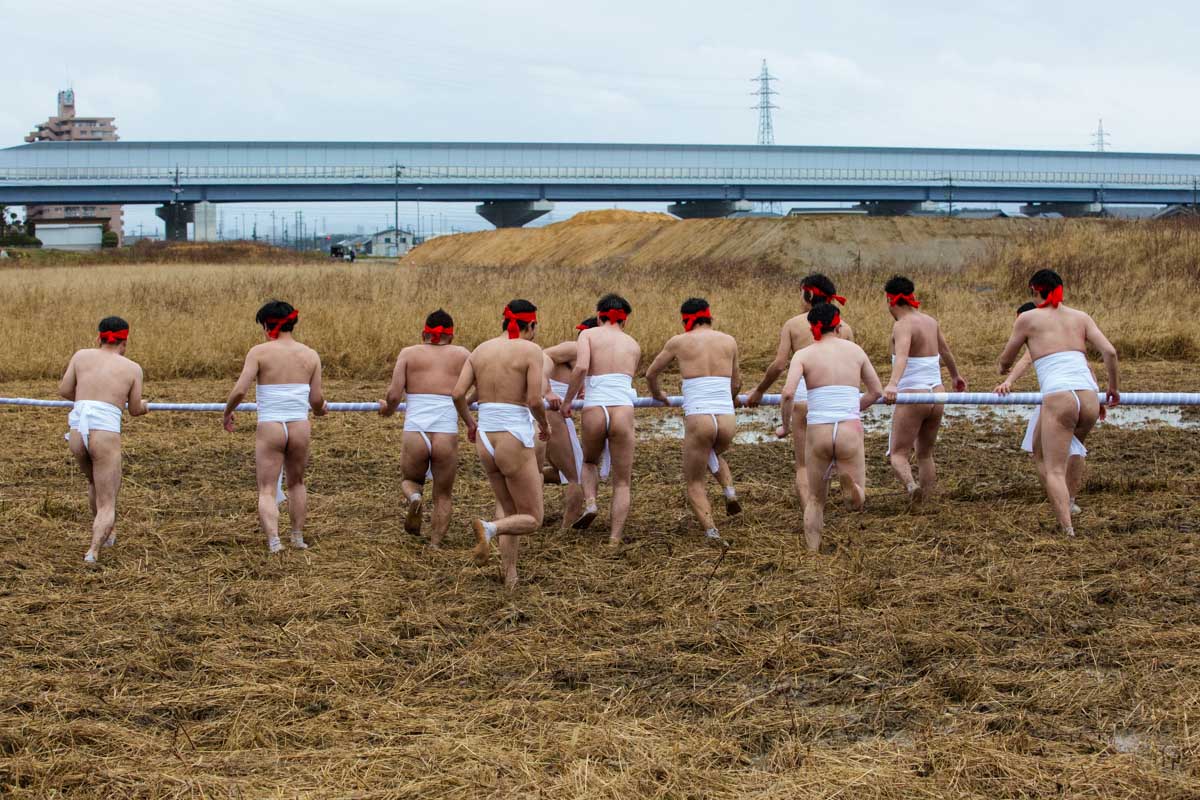
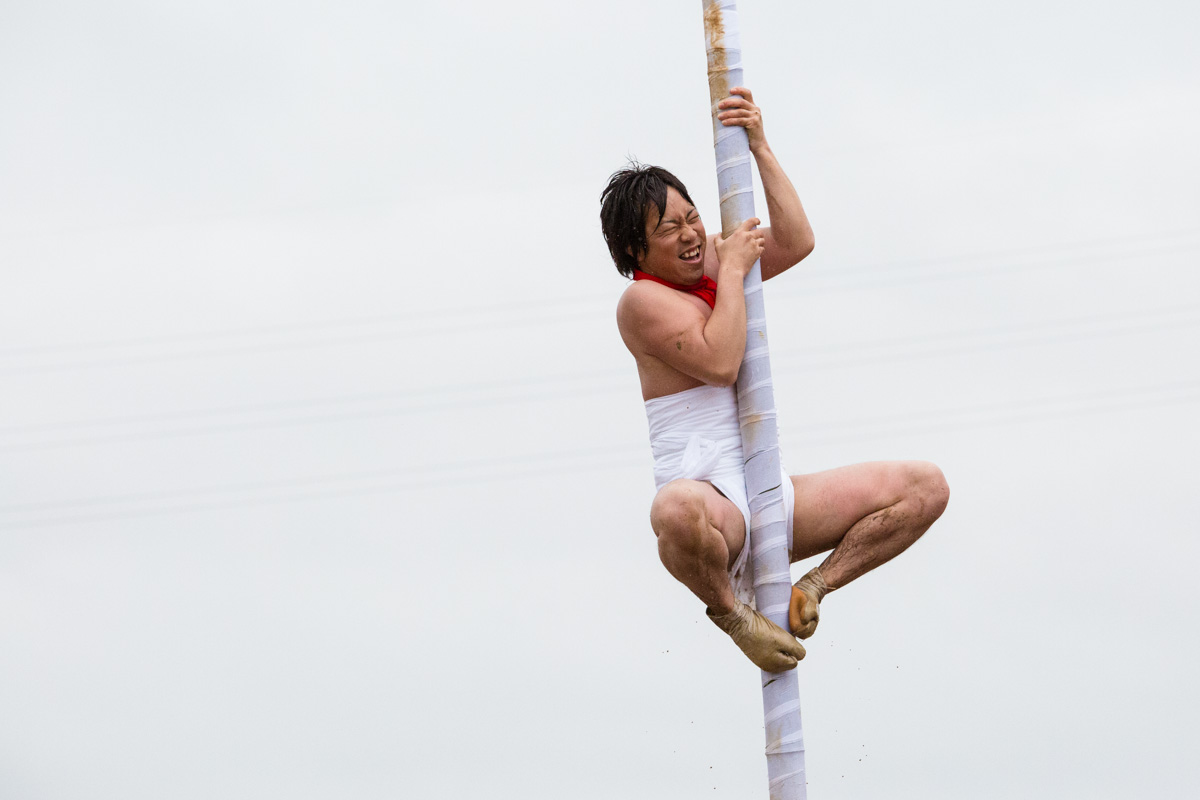
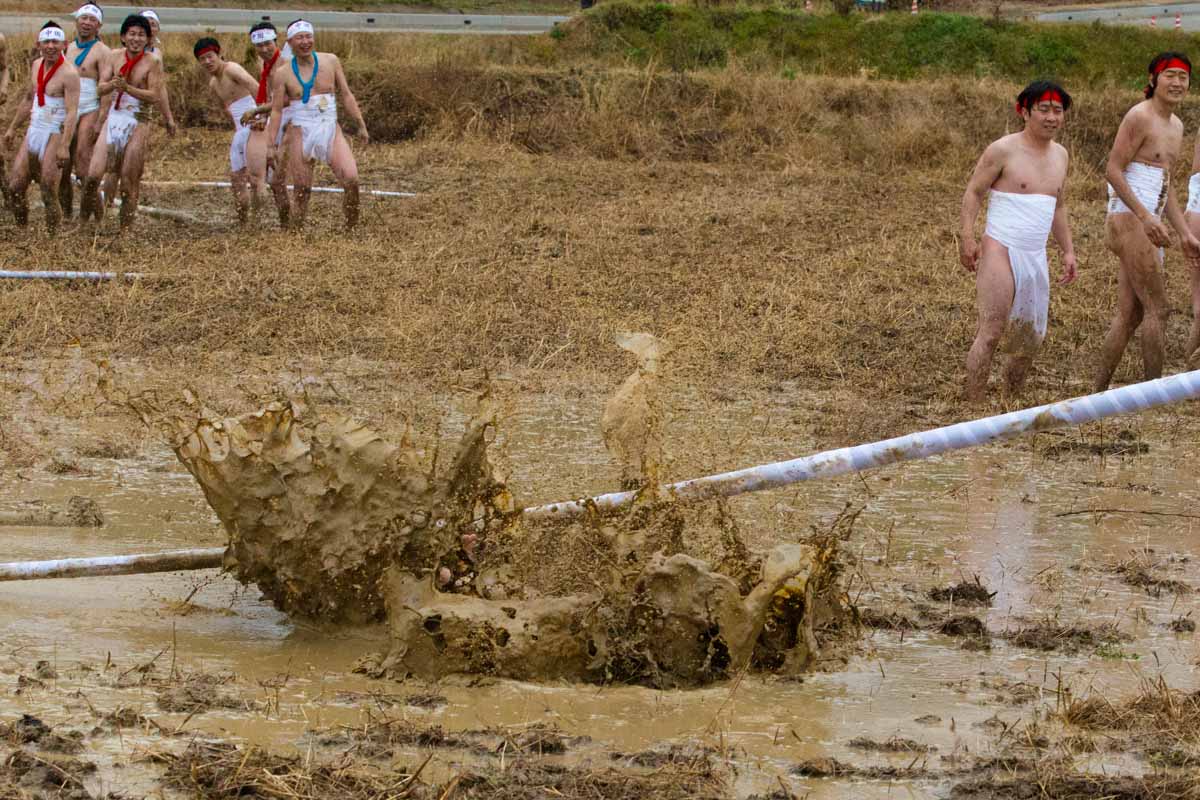
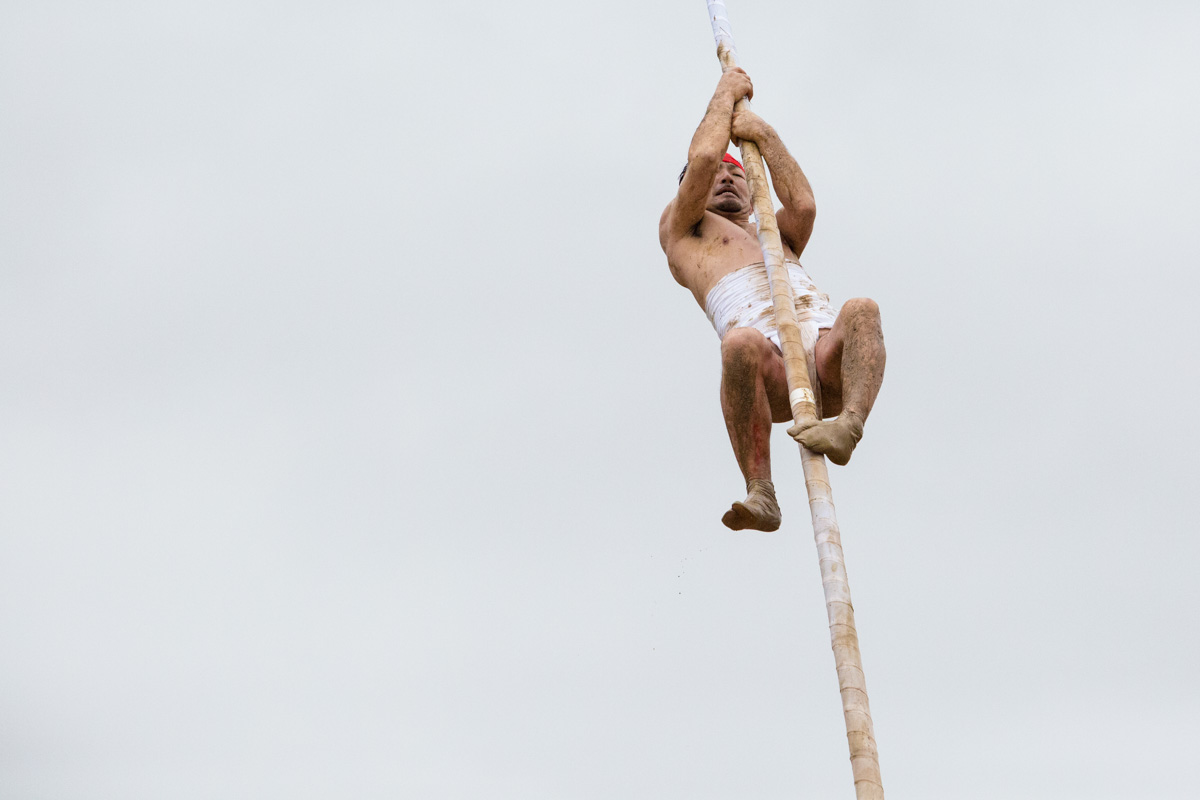
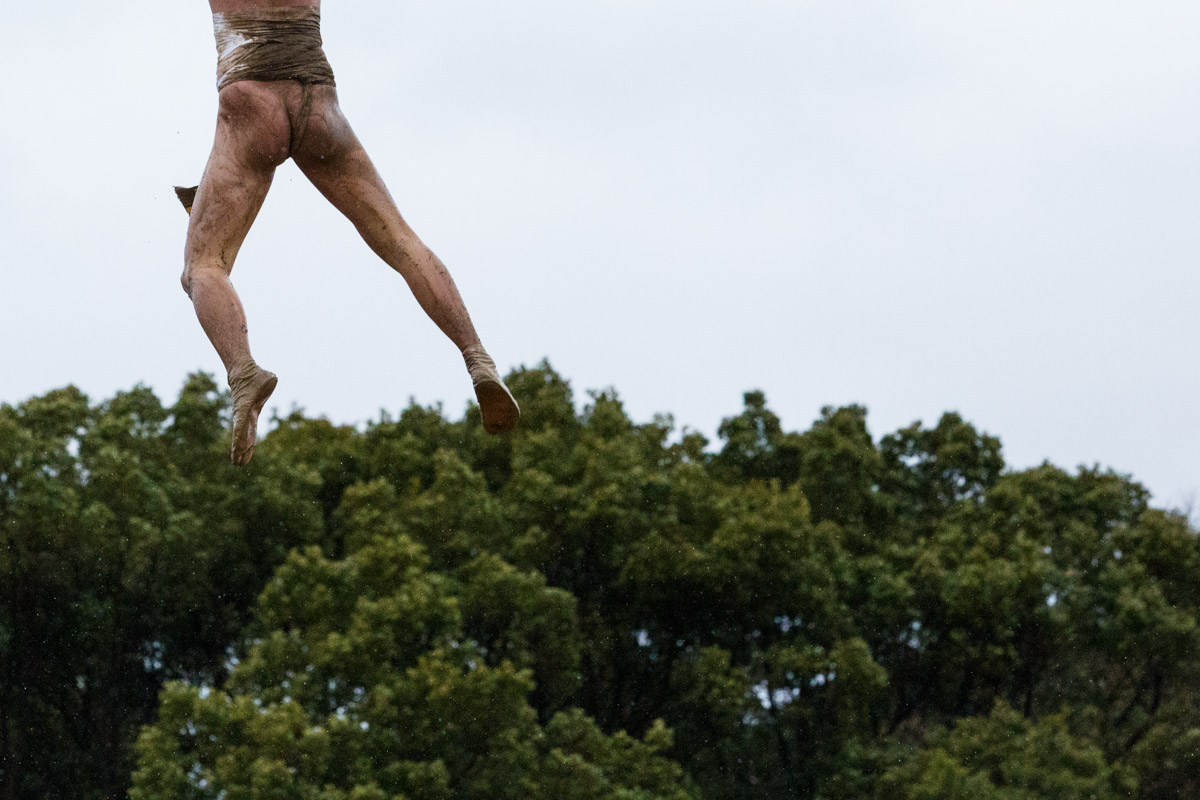
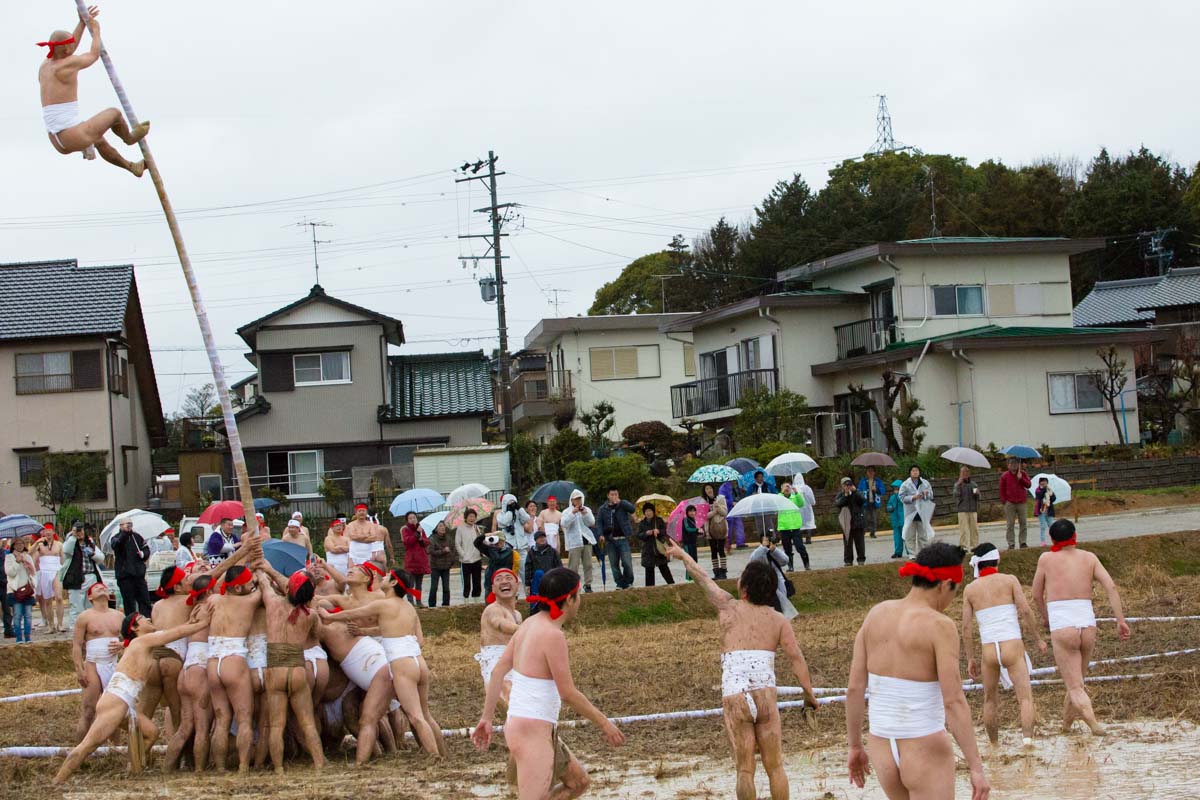
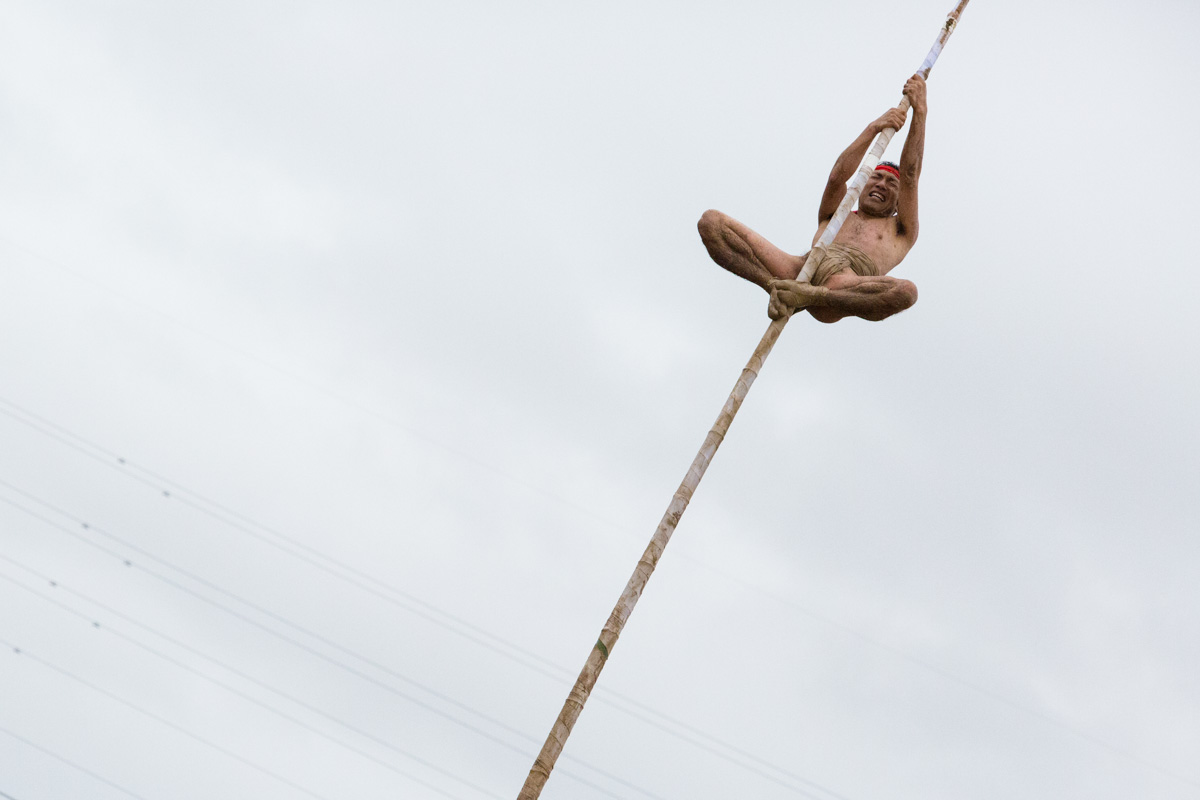
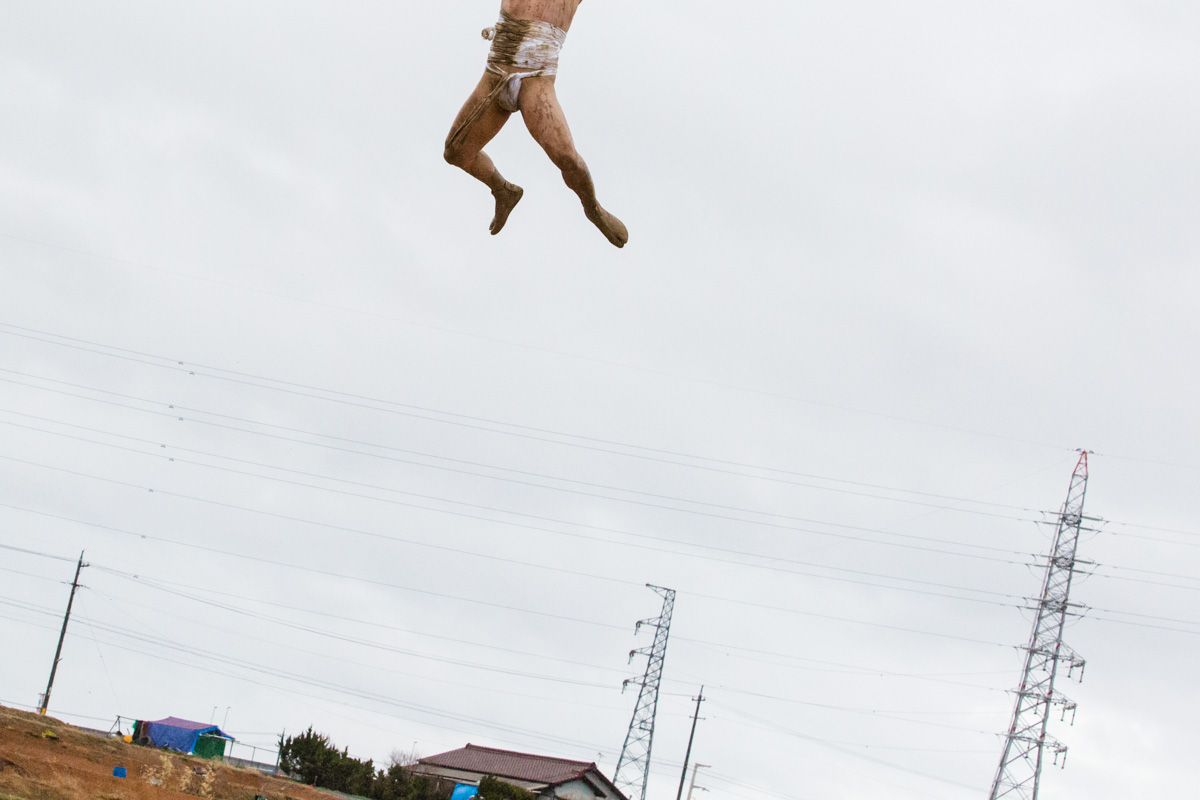
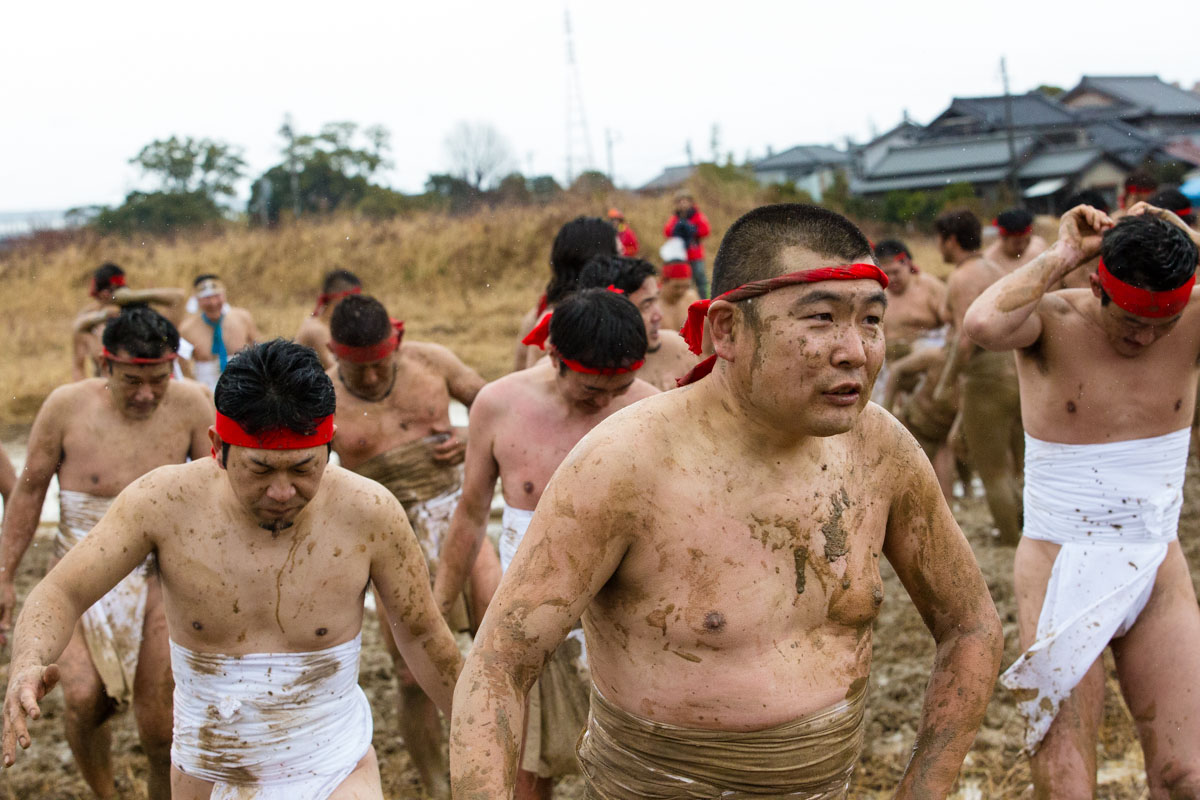
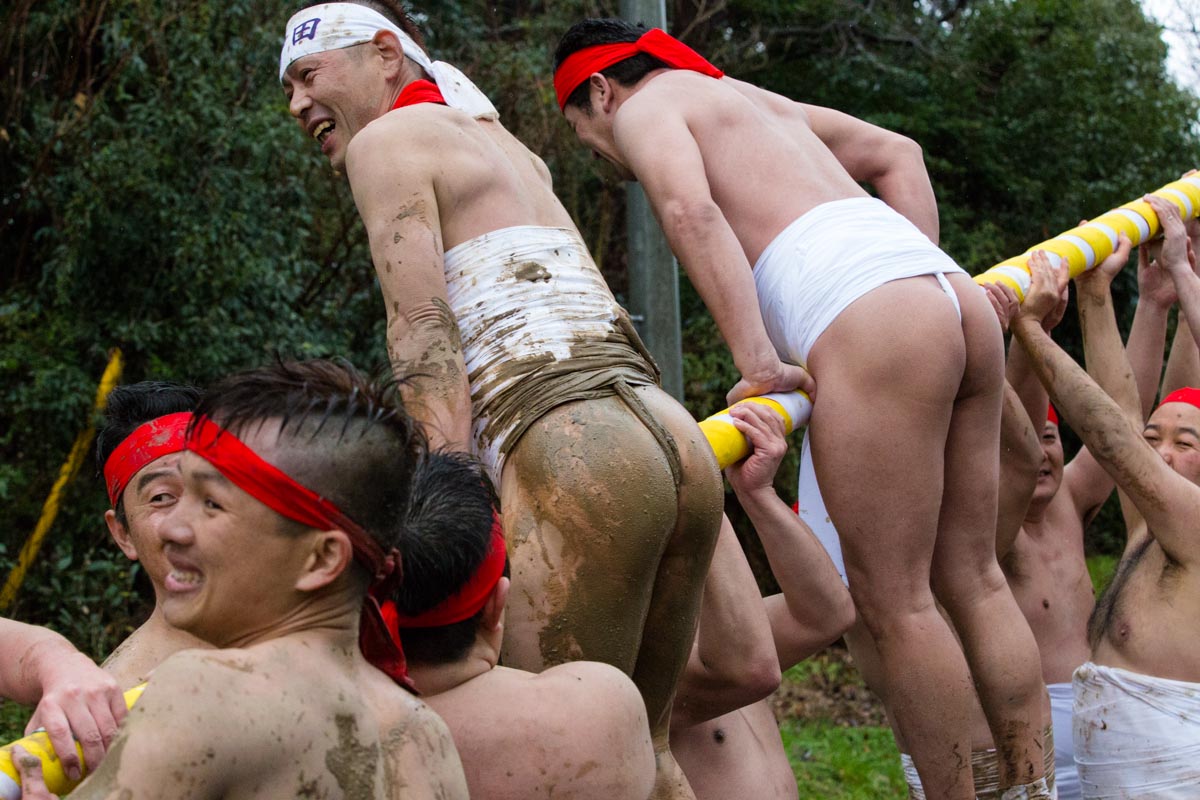
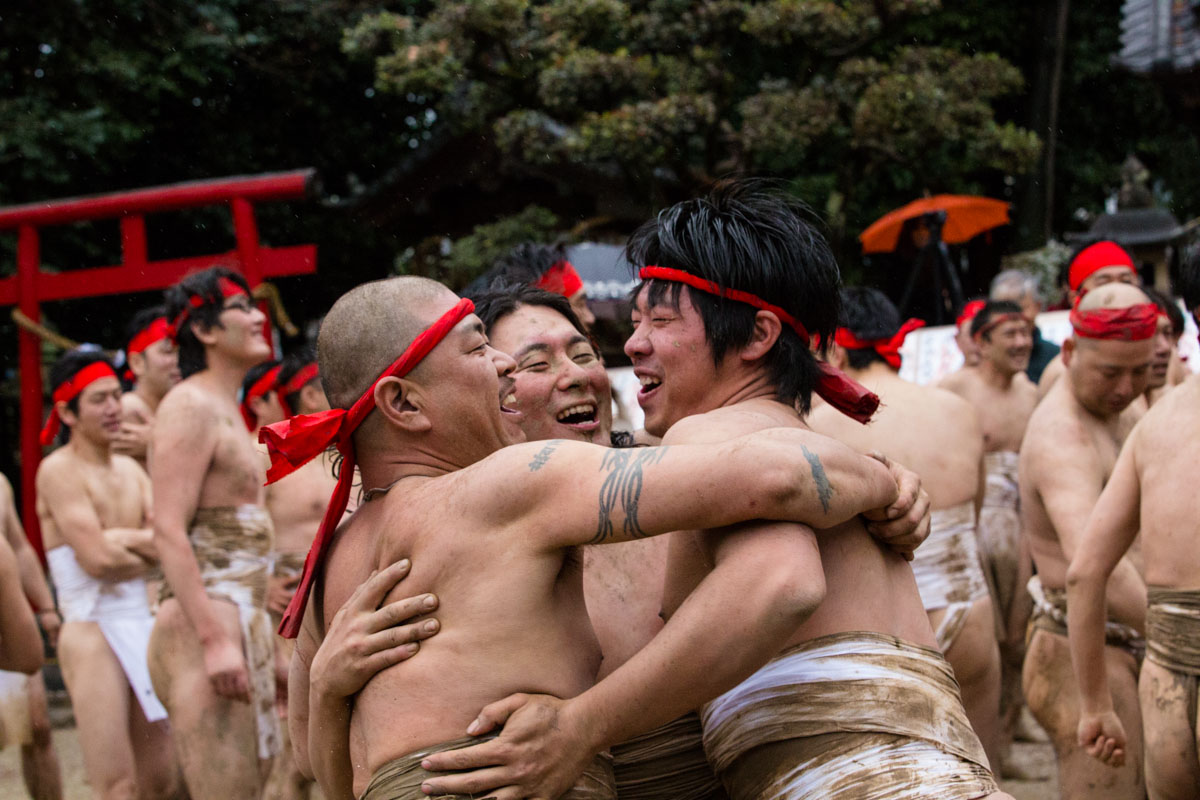
Then his comrades came in carrying bamboo, and the field changed at once from empty ground to shared ground. They were smiling, joking, full of the loose excitement of men about to do something difficult and faintly absurd together. They drove the first pole into the mud and braced it at the base with both hands and set shoulders while the first climber went up. He climbed far higher than the conditions seemed to allow. The bamboo bent but held. Then his hands slipped, and he dropped backwards, roughly 20 feet, into a muddy pool deep enough to swallow him almost whole before the men below dragged him out laughing, slapped his back and urged the next climber forward.
This was the Nakada Hadaka Matsuri, a local hadaka matsuri, or “naked festival”, held on the first Sunday in March in Toyota’s Nakada district and derived from the better-known Konomiya tradition. Founded in 1932, it is relatively young by the standards of such festivals, and modest in scale: about 130 men take part each year, most of them from Aichi, though the event is open to men from outside the prefecture as well. That modest scale is part of its force. From a distance, especially in weather like this, it can look like little more than rough horseplay in a muddy field. Up close, its order is unmistakable: a small local festival in which danger, excitement, humour and community are pressed close together.
“Naked festival” is only a partial description. The men are usually dressed in fundoshi loincloths and white tabi rather than fully naked, and the point is not exposure but purification. The rite is organised around yakudoshi – years in a person’s life thought especially vulnerable to misfortune. The principal unlucky ages for men are 25, 42 and 61, with 42 treated as the major dangerous year. Many Japanese mark those years by undergoing purification and praying at shrines and temples for better fortune. At Nakada, that unease is made physical, public and shared.
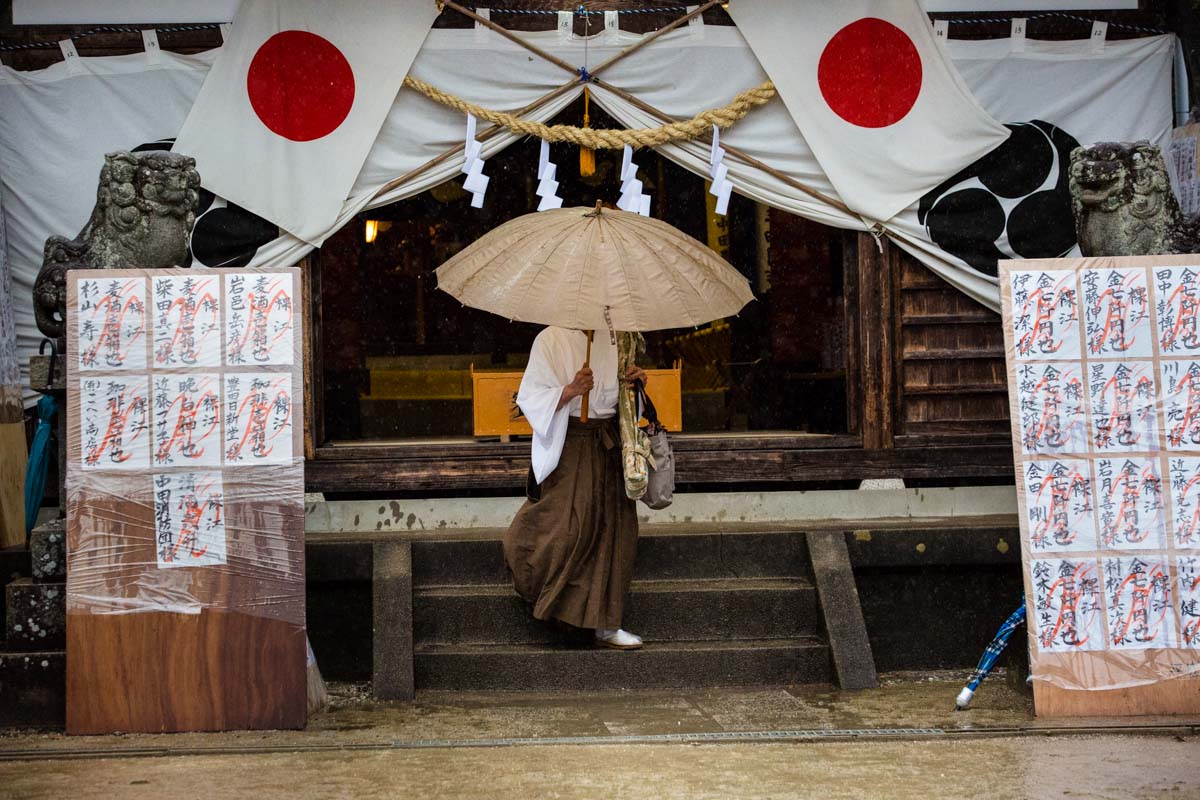
Nakada’s link to Konomiya is literal as well as ritual. Local histories trace the festival to the rebuilding of Nakada Hachiman Shrine in 1932, when it emerged that a sacred object from Owari Konomiya had long been enshrined in the main hall. By 1934, villagers had built Nakada Okunitama Shrine beside Hachiman Shrine and begun performing the rite annually in connection with the older Konomiya tradition. The larger Konomiya festival still supplies the broader pattern: in its main naoi shinji, or misfortune-purging rite, men believe that touching the shin-otoko, the designated ritual burden-bearer, allows them to cast off misfortune, while the later yo-naoi rite carries that burden further into its final removal. Nakada follows the same logic of transfer and release, but on a smaller and more intimate scale.
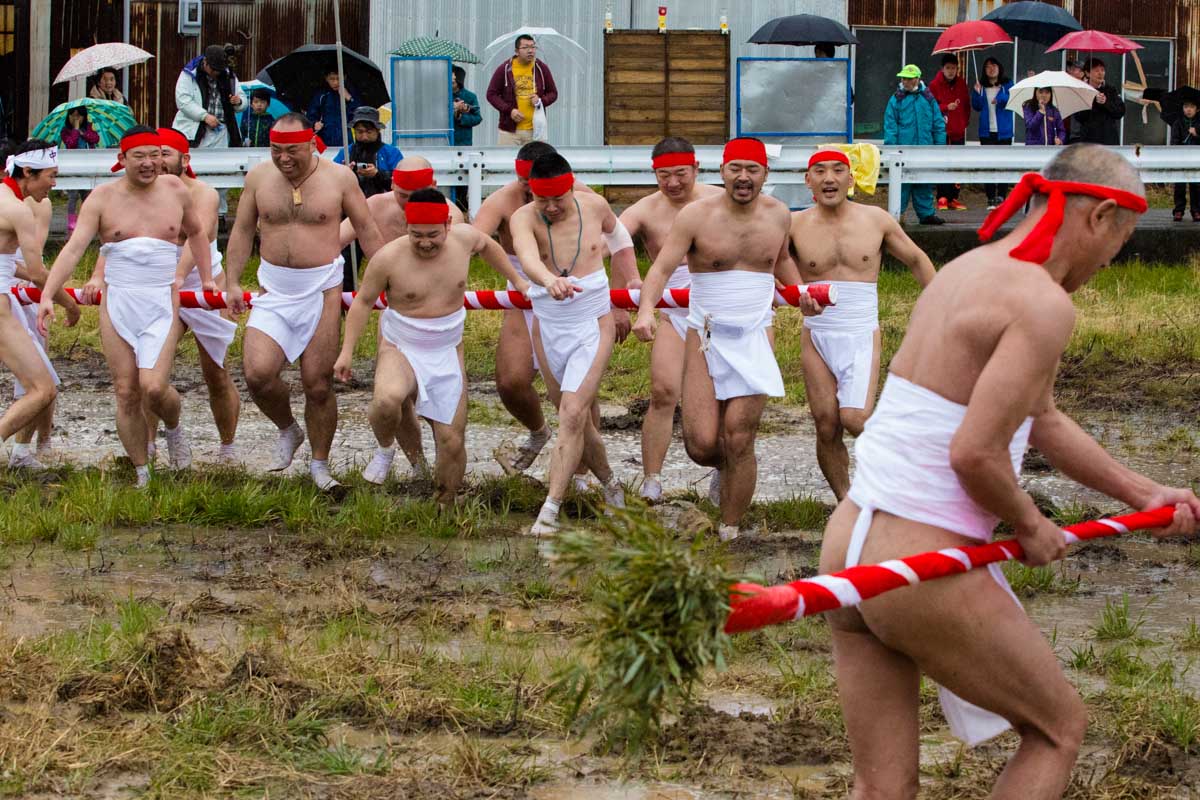
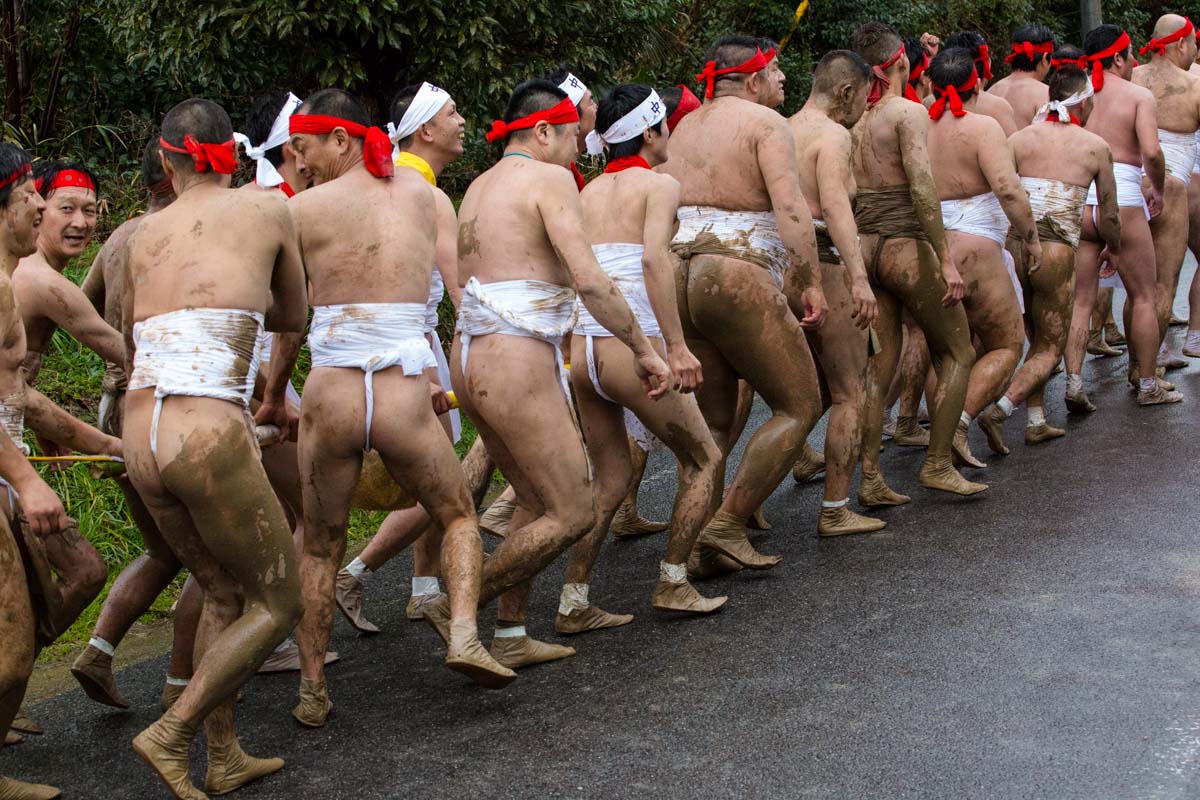
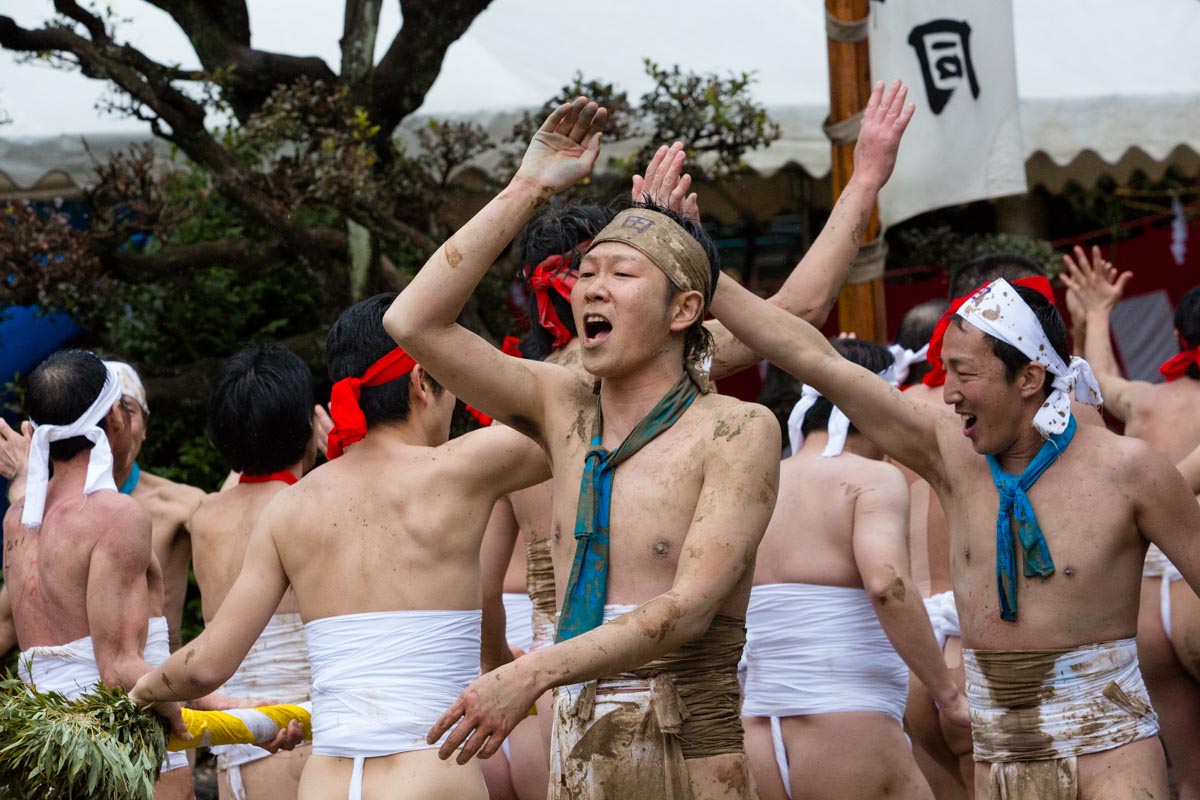
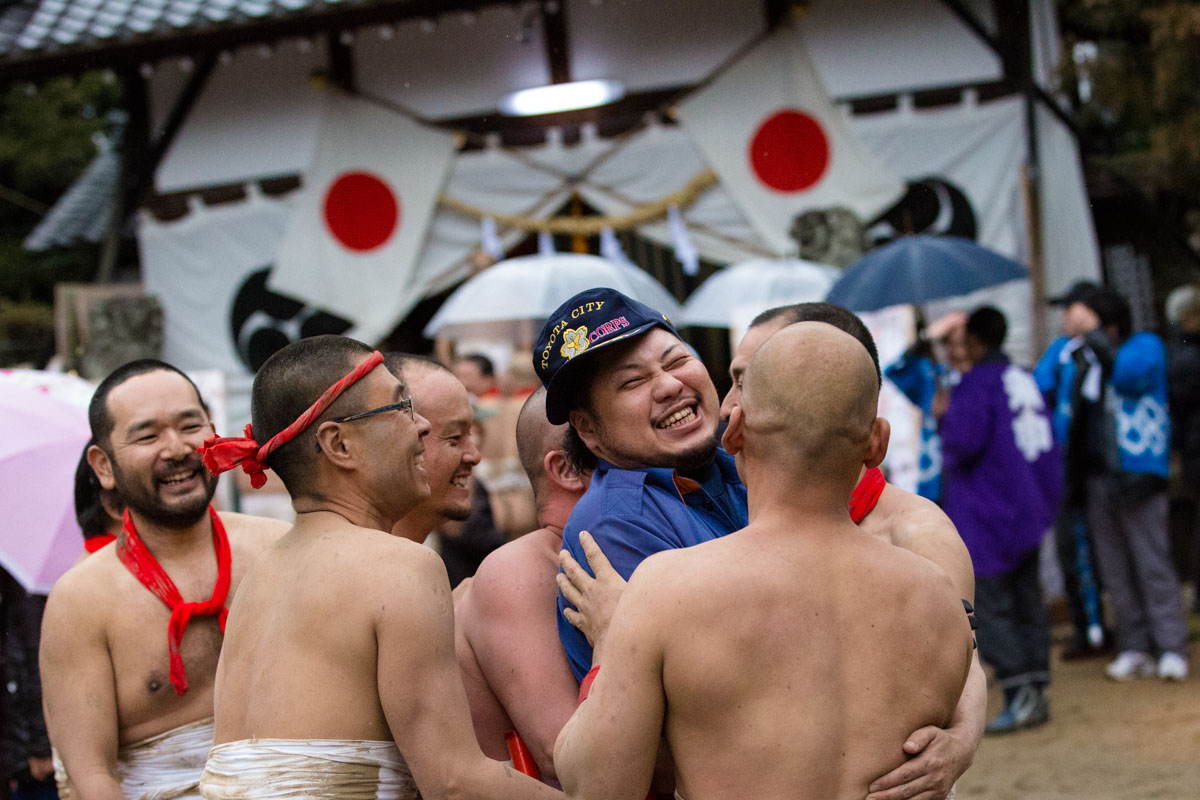
The day itself begins at the community hall with more racket than grandeur. The men gather, change, sort themselves by coloured headbands and settle into a mood that is social, noisy and already half festive before the formal movement of the rite begins. Red headbands are worn by men in a yakudoshi year, representing the highest degree of danger. Blue are given to men one year before a yakudoshi year, while yellow is assigned to men who have already completed one. Others wear white headbands, and local participants from Nakada Town wear headbands marked “Nakada” to distinguish them from men who have come from outside the district. Because only certain years are considered unlucky, the participants rotate every year, though some return anyway, drawn back by the fun of it and the company. There is food, drink, the rustle of men knotting cloth at the waist, posing for photographs, shouted greetings and the rough warmth of men readying themselves together.
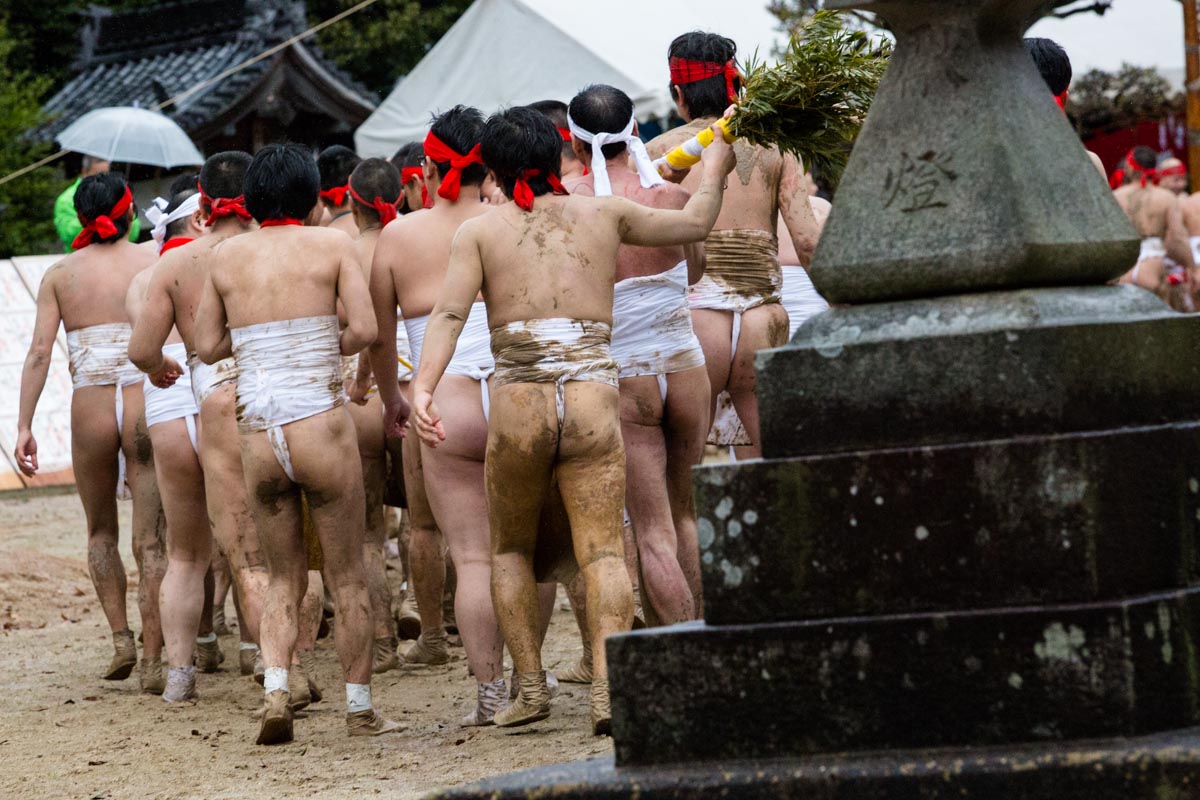
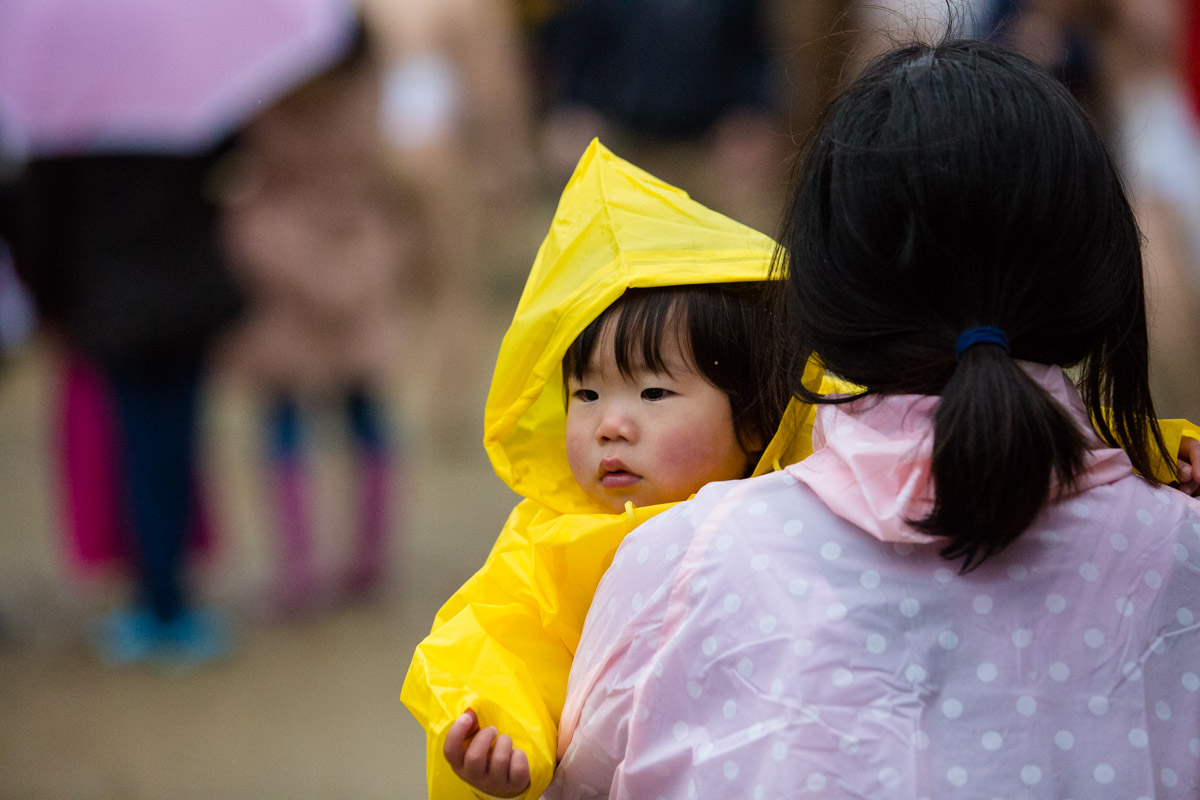
Then the procession forms. The great kagami mochi, a large ceremonial rice cake, goes out first, followed by the men carrying the sacred bamboo towards the shrine. The white cloth wound around the poles bears the names and wishes of women and children who do not take part directly, folding absent family into the rite as surely as the men who shoulder the weight through the rain. Rain darkens the white cloth, the poles rock on shoulders, and the procession moves on towards the paddy-field stop and then the shrine precinct, carrying prayer, anticipation and bravado through the village streets.

Enjoying the article?
Sorry to interrupt. If you’ve been enjoying the article, I’d love for you to take a brief detour to Instagram and follow @thadpope. The link opens in a new window, so you can follow the page and then return here straight away to continue reading. Thanks for the support.
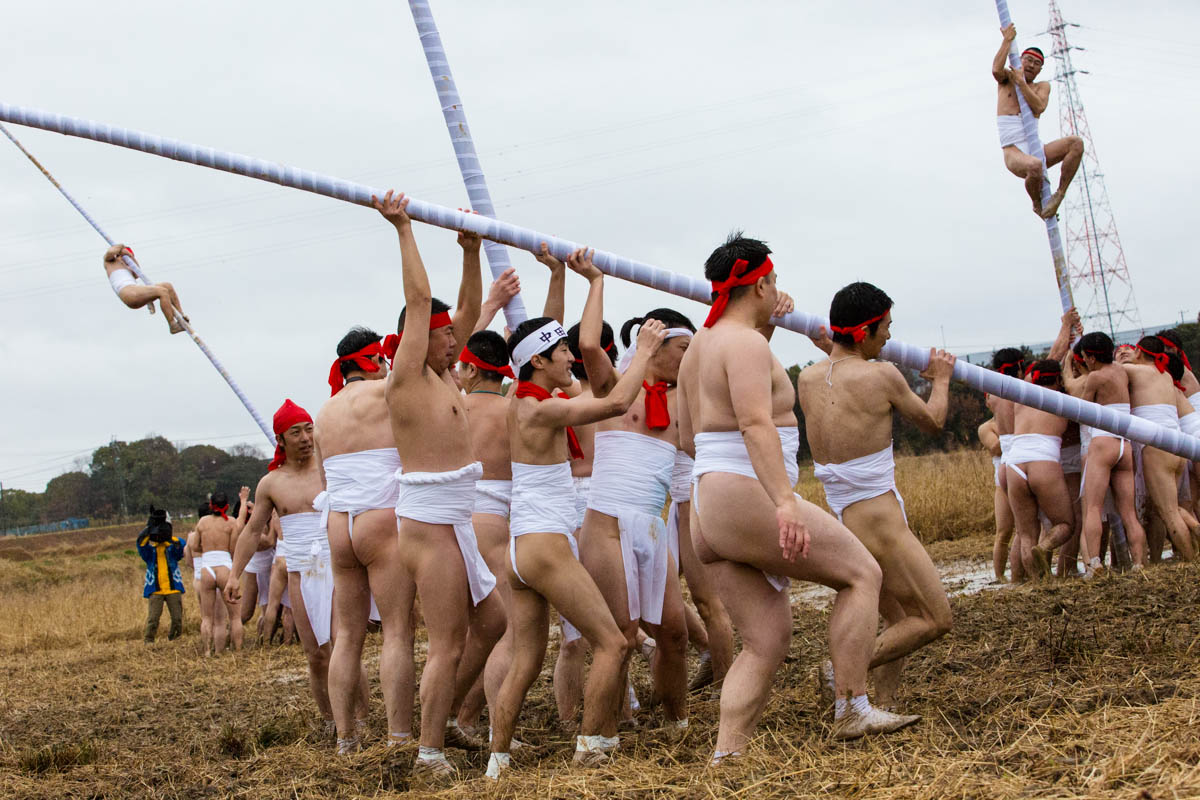
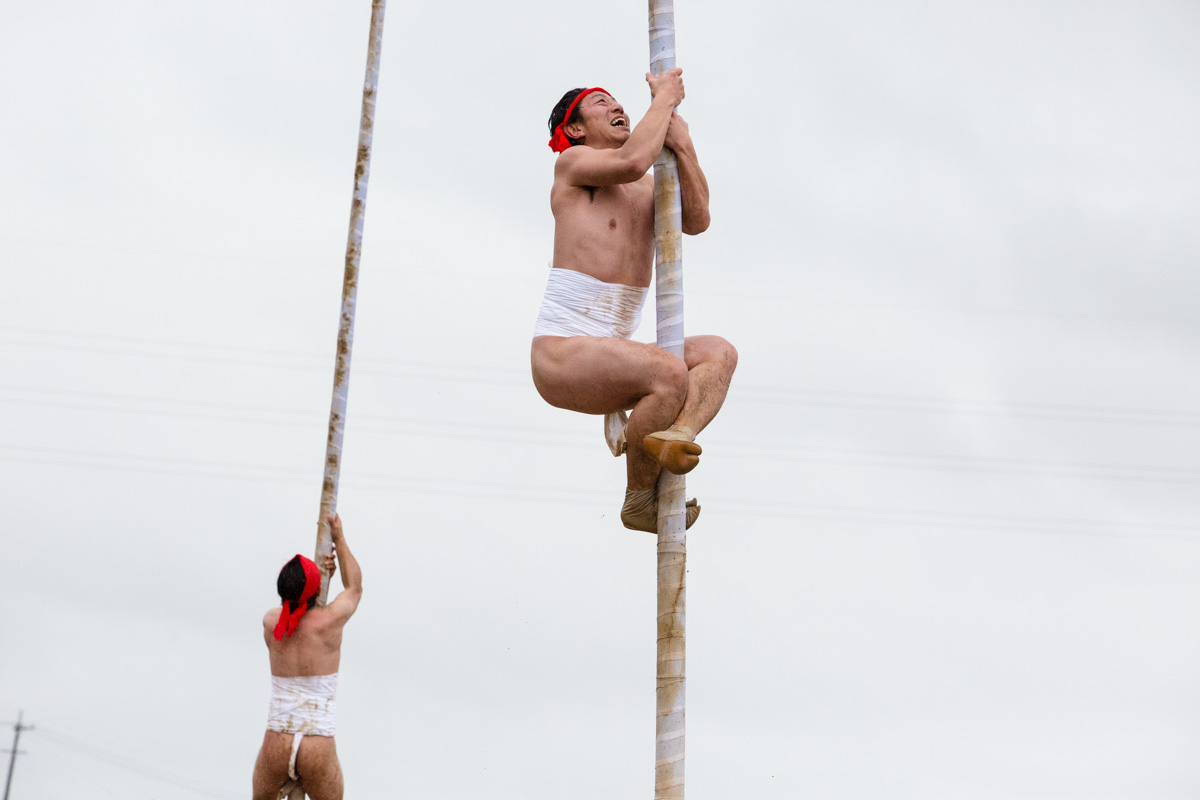
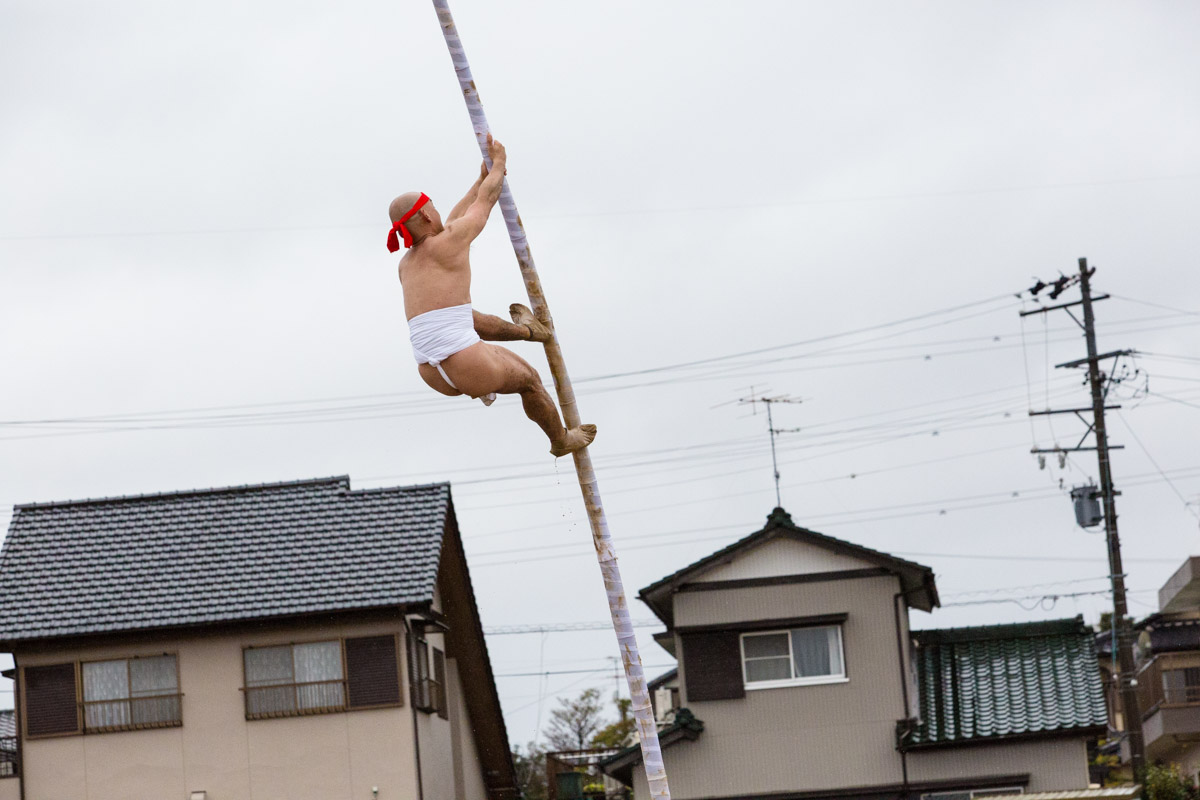
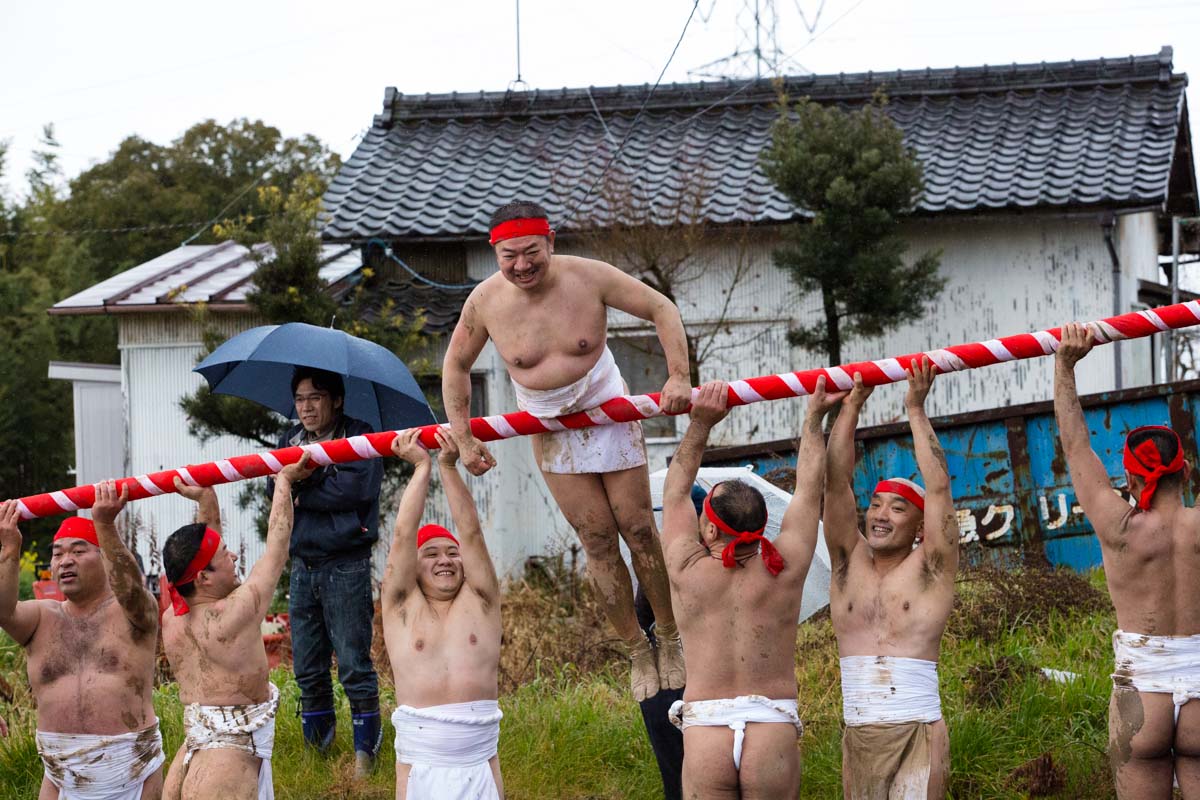
The bamboo-climbing stage is itself a relatively recent addition. It dates to the festival’s 60th anniversary in 1992, when someone playfully climbed a sacred bamboo in a field on the way to the shrine; since then the men have prepared white-wrapped poles and climbed each one until it breaks. In the field the mechanics are simple and exact. The men at the base hold each bamboo pole upright while one climber after another tries to shin as high as possible up the length. Every man wants height, but height alone is not the point. The real honour lies in being the climber whose weight finally makes the bamboo split.
What makes the feat so impressive is how little in the conditions favours success. These are not trained acrobats or circus men. They are ordinary participants trying to climb slick bamboo with muddy hands and slurry-coated tabi while rain continues to fall and the field shifts under them. With friends and family cheering them on, the men below lock the pole in place as best they can while the climber searches for purchase, stretching, sliding and hauling himself higher against the odds. Some reach startling heights. Even in a festival full of laughter, the effort is serious. Every climber is trying to go higher than the last and, better still, to be the man who breaks the pole.
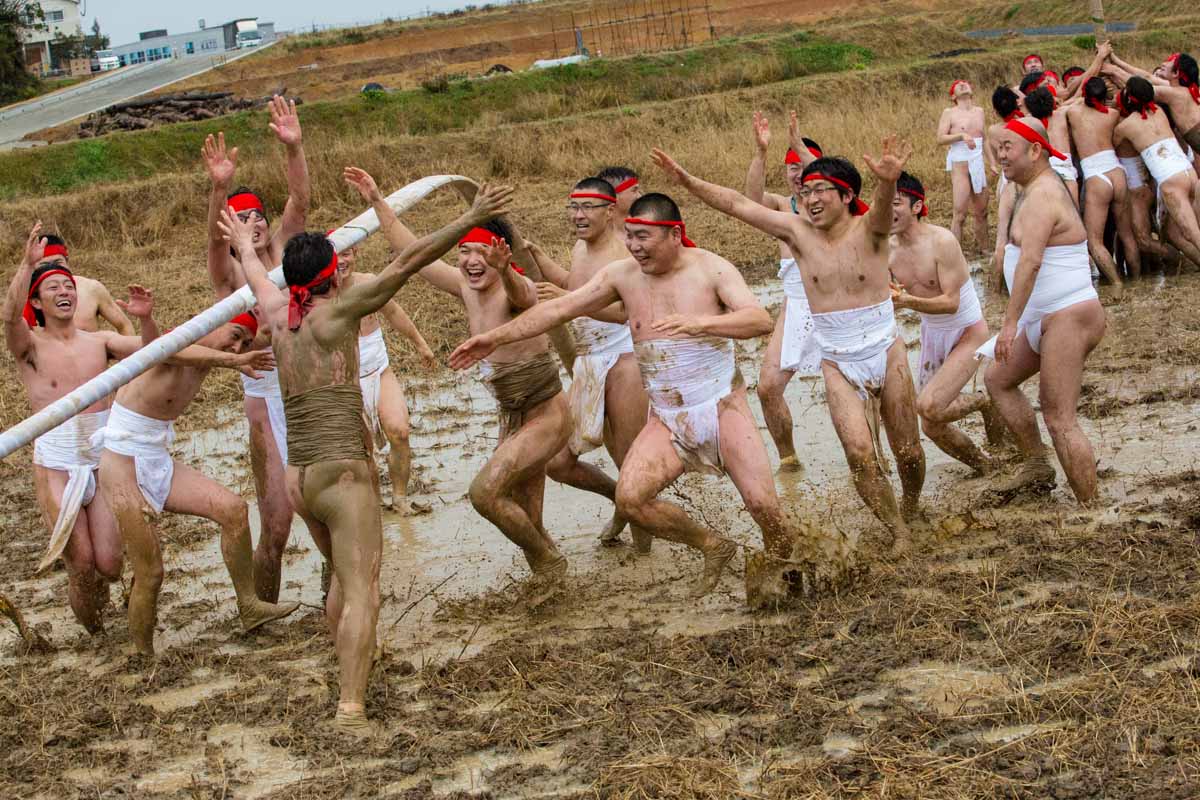
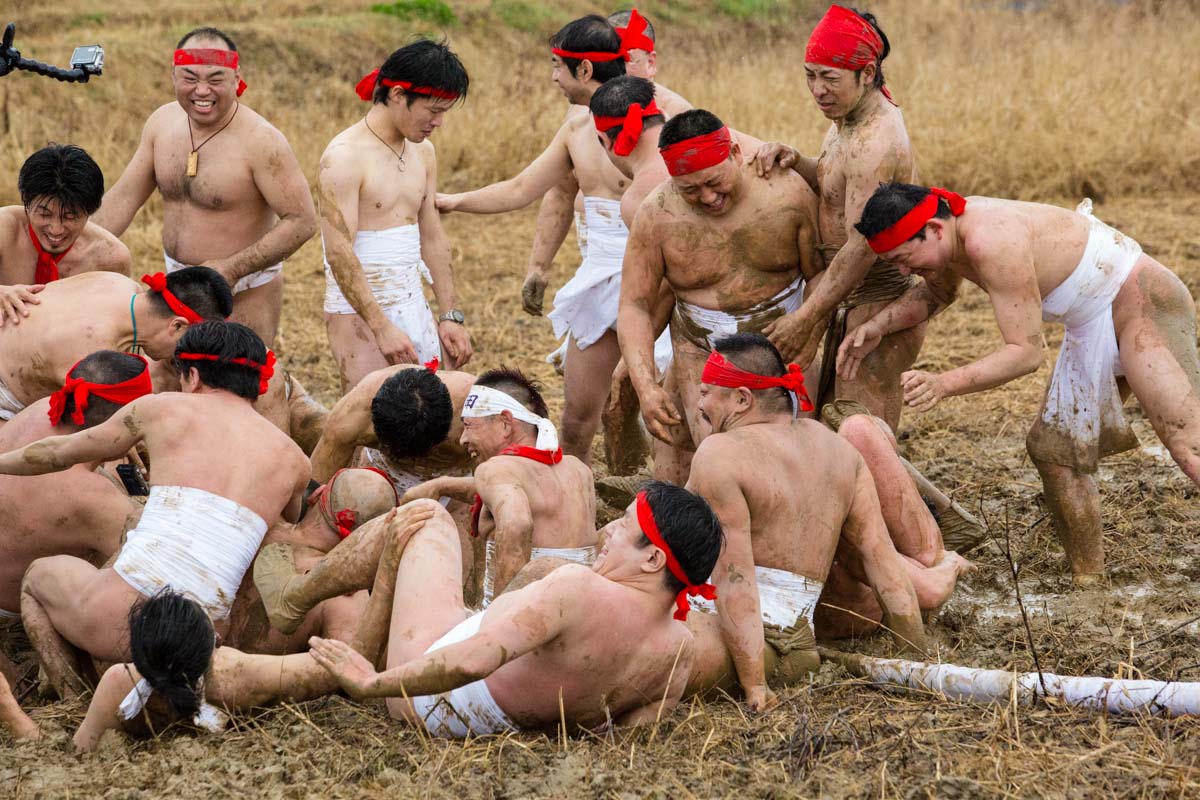
And yet the field is joyous. Men vanish into brown water and come up to cheers. A fall is met first with laughter, then with hands reaching in to pull the climber clear, and then with another attempt. The rain-softened paddy turns what might otherwise be punishing failure into something survivable, exuberant and communal. When a pole finally gives, it goes with a loud snap, drawing applause and cheers from participants and spectators alike. If the bamboo proves stubborn, two men may climb together until it breaks under their combined weight. High fives, embraces and shouted encouragement follow the men from climb to climb. The laughter binds the men to one another, turning danger into comradeship.
Only after all the poles have been broken do the men shoulder the wet remnants and carry them triumphantly towards Nakada Daikoku Shrine, about 100 metres away. There the bamboo is dedicated to the shrine, to be burned with the festival’s other offerings on New Year’s Eve. Only then, outside the red torii shrine gate, does the day tighten into its next phase.
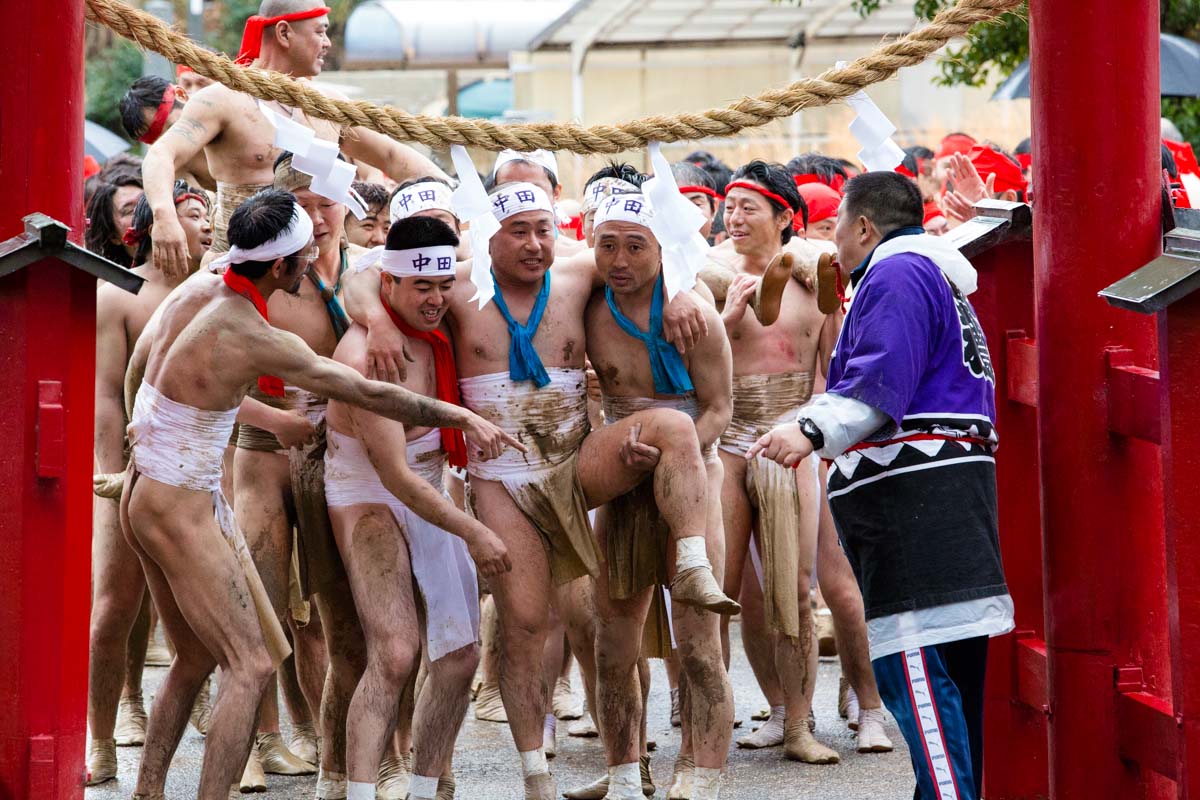
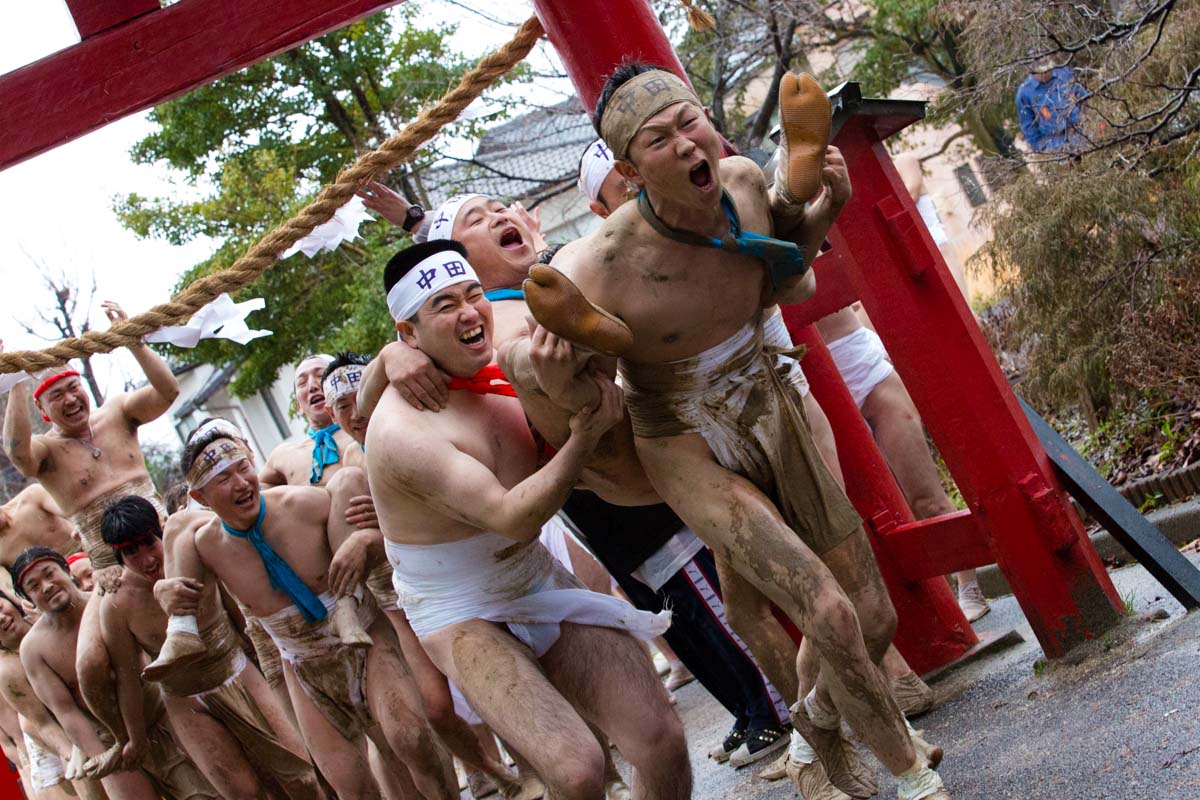
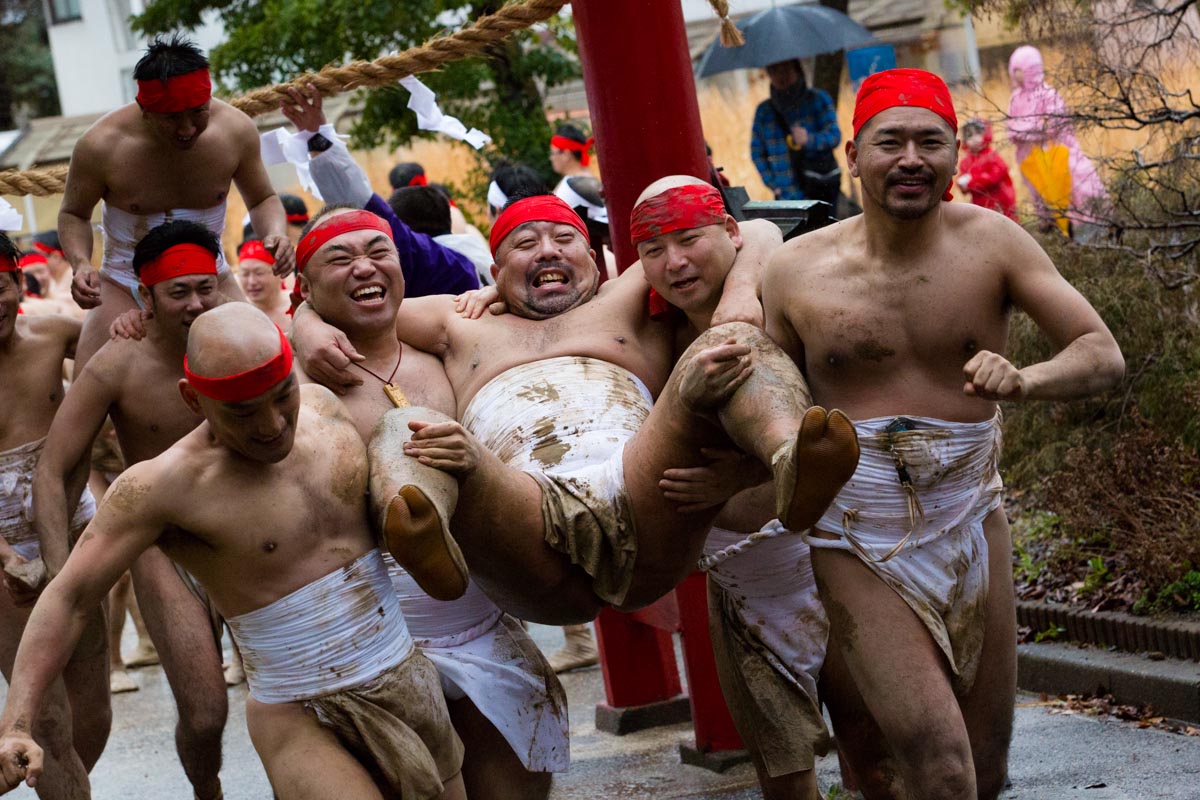
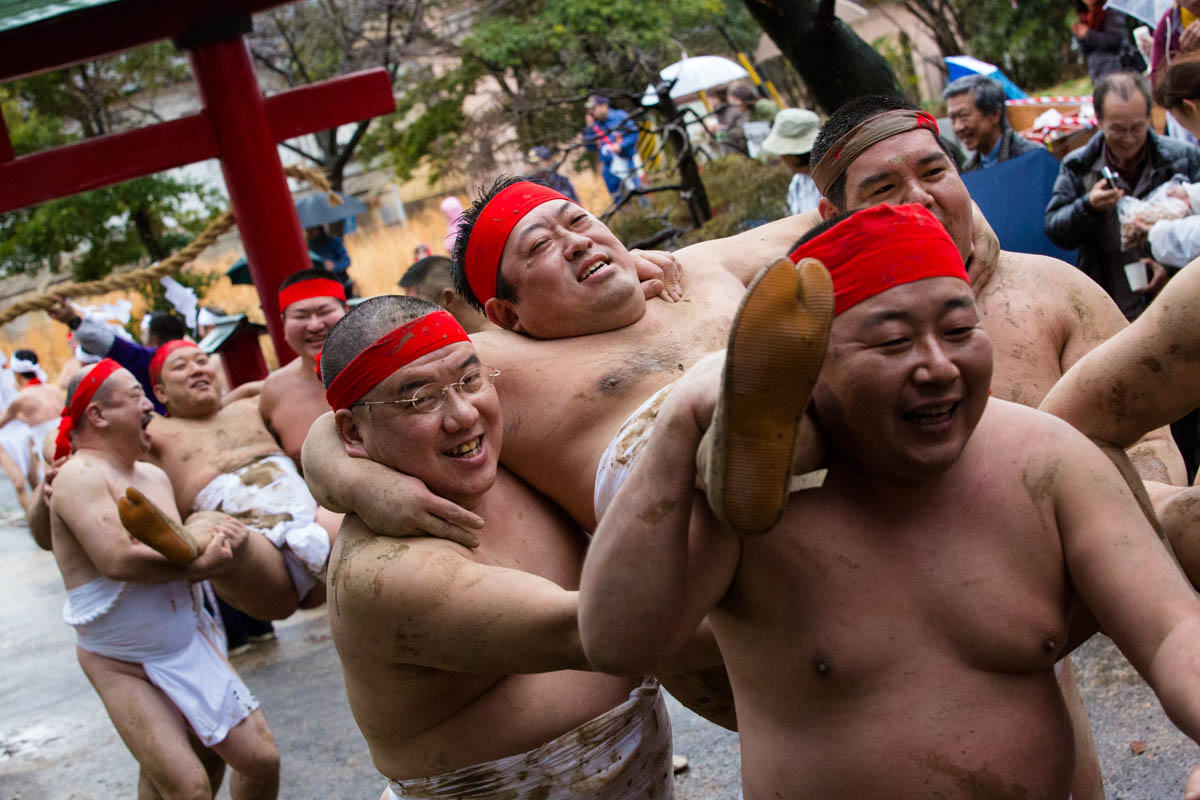
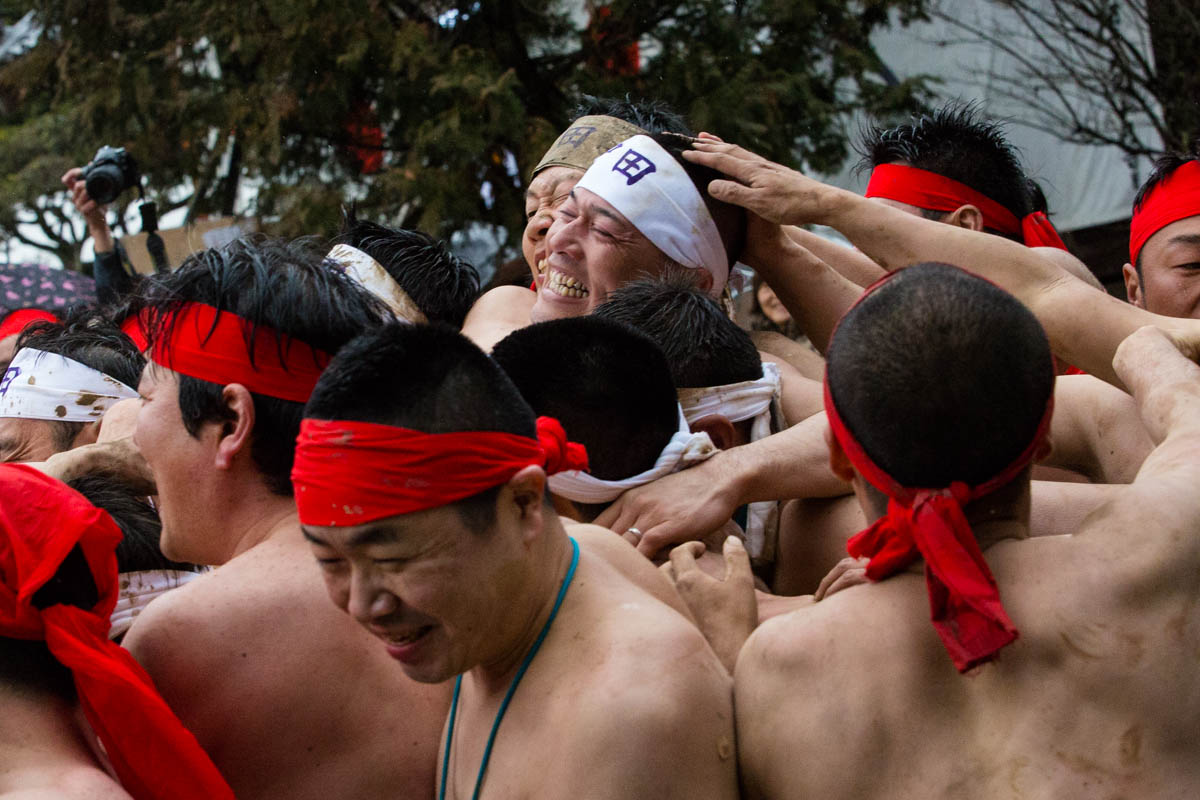
At the shrine the mood tightens, but it does not lose its rough humour. After devoting the kamitake – the sacred bamboo poles – to Nakada Daikoku Shrine, the men gather outside Hachiman Shrine, hoist the yakudoshi men on to their shoulders and carry them at speed through the red torii shrine gate. Then they form around the shin-otoko in a wet, noisy, still laughing scrum, each trying to touch him and pass on the burden of his unlucky year. The rotating mass has something of a whirlpool to it. What was expansive and playful in the paddy becomes more compressed and urgent here, but it remains full of shouts, grins and rough enjoyment as the crowd presses its bad luck into a single body.
Then comes Nakada’s closing act. The shin-otoko, now in a white robe, is taken inward for the final purification. Elders line up before the shrine. The mochi that has absorbed the men’s bad luck is dropped into the prepared hole, and a shout goes up that the bad luck has fallen. The rice cake is buried, priests complete the final purification, and rice cake is served. What began in slipping feet, muddy falls and shouted laughter ends with the year’s anxiety put formally into the ground.
By late afternoon the men have worshipped, prayed for good luck and peace in the year ahead, changed back into ordinary clothes at the ward hall, and collected festival bags containing mochi cake, a talisman and a small bag of sweets. The paddy is left behind, the bamboo gone from it, the road still running past as though nothing unusual had happened there at all. Not every matsuri, or festival, needs thousands of participants and spectators to justify itself; some are small, local, relatively young, and all the stronger for the closeness they create among the people who carry them. By dusk, Nakada has returned to an emptied field by the roadside – and to the memory of how much it briefly held, and to the hope that the year ahead will be filled with fortune and joy.
To view other photo-essays from the “Matsuri” photography project, click here.
Text and images copyright © Thaddeus Pope. All rights reserved. No unauthorised use, reproduction, distribution, or publication without prior written permission.
Join Mailing List
If you’re enjoying my work and would like to hear when new photo essays are published, join my mailing list. You can unsubscribe at any time.

Support the Work
If you’d like to support my work, you can buy me a coffee via PayPal below. It helps with the many hours of research, writing, editing, and website design that continue long after the camera has been put away.
Gallery














Thaddeus Pope
Documentary photographer based in Japan
I’m Thaddeus Pope, a documentary photographer who also works in website and print design. I am available for assignments in Japan and internationally.
To get in touch, please use the contact form or email info@thadpope.com.